


Latest articles

Follow Us


Polished concrete floors are concrete slabs that are mechanically ground and polished, or ground and sealed, to create a smooth, hard-wearing floor finish. In Melbourne, What's The Damage puts the typical cost at about $115 per m² to polish an existing slab and about $220 per m² for a new slab poured and mechanically polished (verified October 2026). In a new home, the best results come from planning the floor before the slab is poured.
This guide covers what polished concrete is, its pros and cons, the main finishes, aggregate and colour choices, planning in a new build, where to use it, care and what it costs.
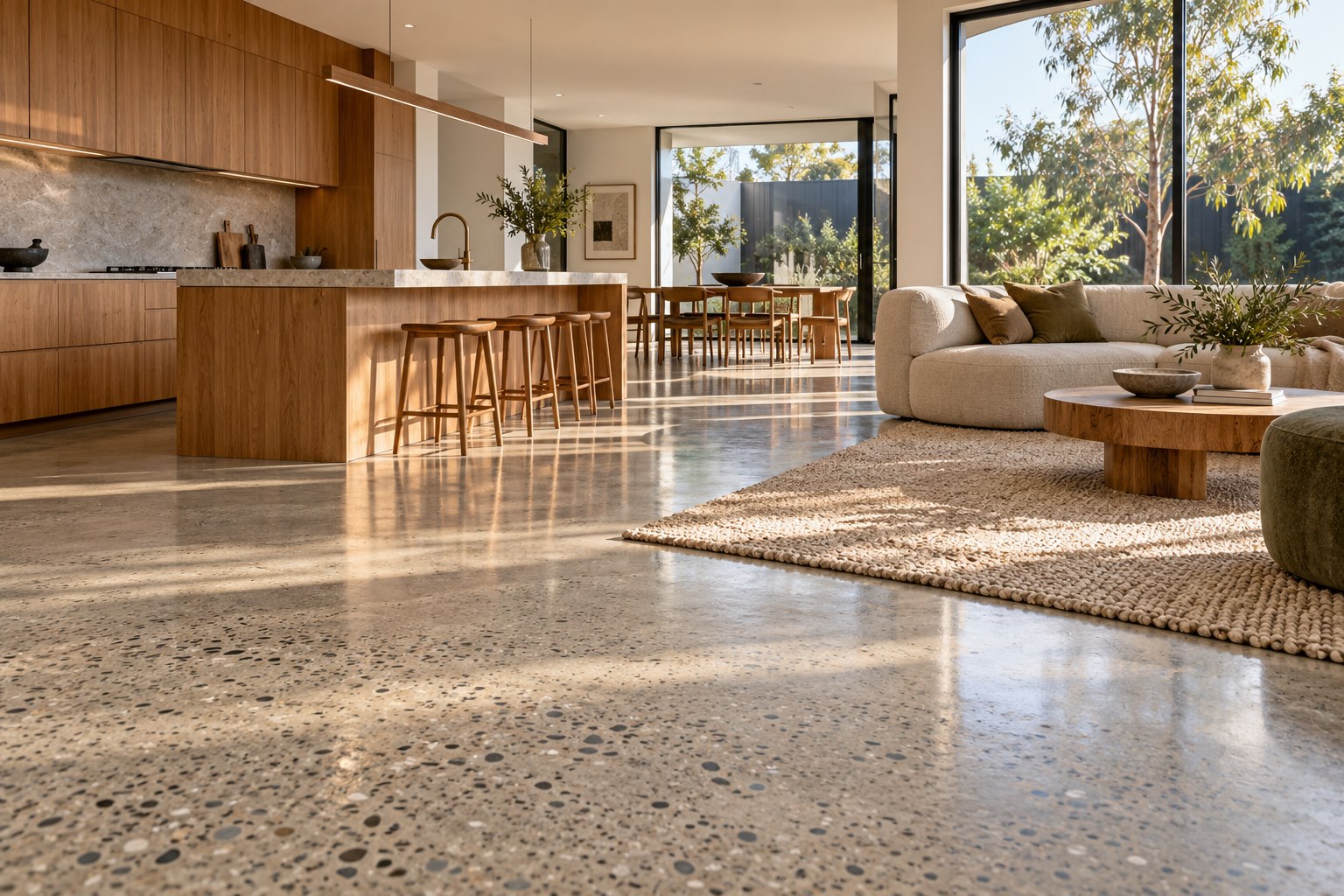
Polished concrete is a concrete floor that has been ground with progressively finer abrasives to expose and refine the surface, then polished or sealed.
Boral describes polished concrete as "a refined decorative finish created by mechanically grinding and polishing a concrete surface". The grinding removes the top layer of the slab, which can reveal the sand and stone (aggregate) inside the concrete. The floor is then densified and polished to a sheen, or coated with a sealer.
There are two starting points:
Polished concrete floors are durable, easy to clean and work well with in-slab heating, but they are hard underfoot, can feel cold without heating and can be slippery when wet.
On warmth, Policrete describes polished concrete as a thermal mass material that holds heat and can feel warm in winter, especially with hydronic heating. Boral notes it "works exceptionally well with underfloor heating systems". Without heating or winter sun reaching the floor, it will feel cool underfoot, so rugs and heating are worth planning for living areas and bedrooms.
On the downsides, a hard floor reflects sound, so rooms with high ceilings and few soft furnishings can feel echoey. Policrete also warns that particularly smooth polished concrete can be slippery when wet, which is why the finish should change in wet and outdoor areas.
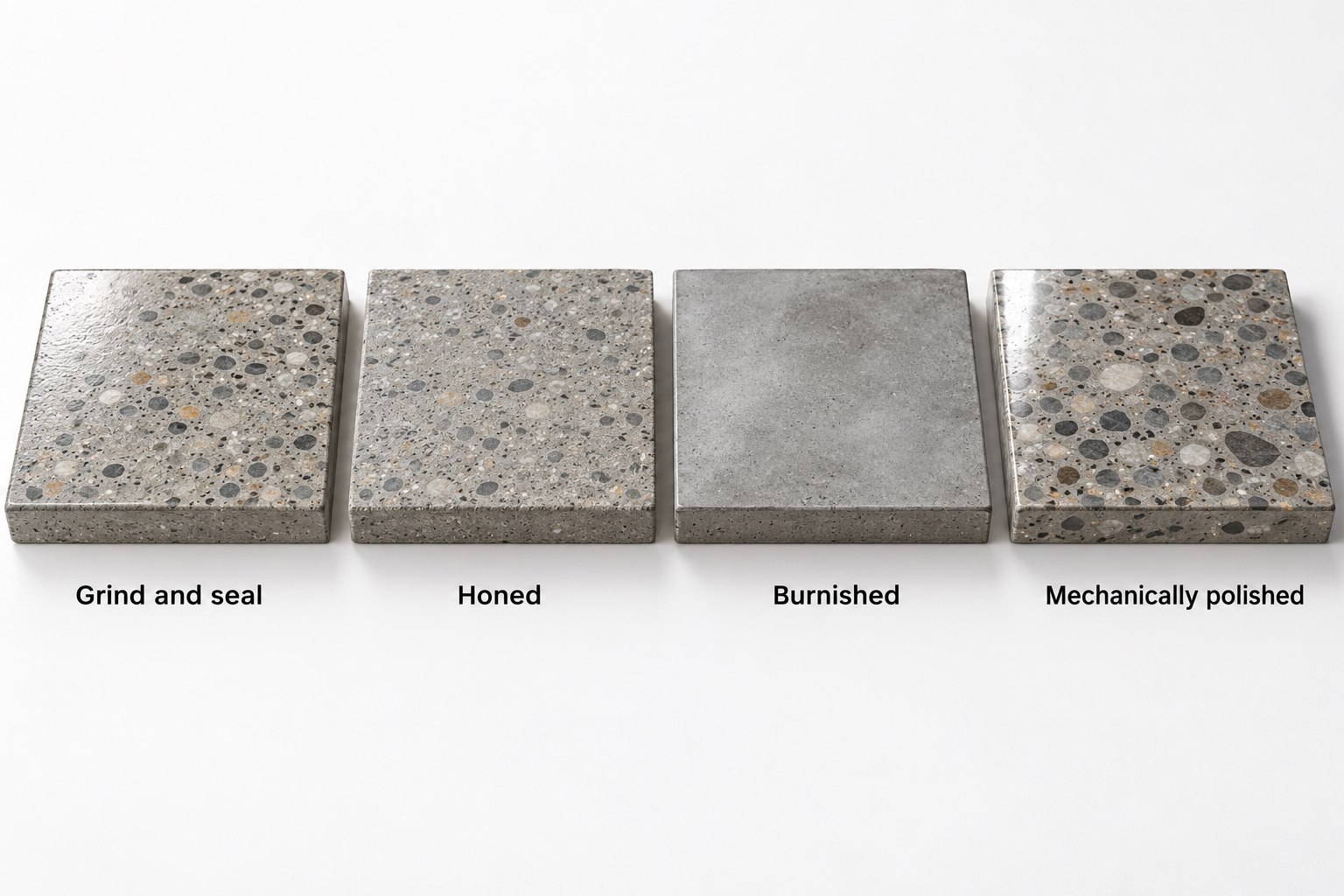
The four main finishes are grind and seal, honed, burnished and mechanically polished, and each suits different rooms.
How much stone shows in the floor (aggregate exposure) and the colour of the concrete are decided before the slab is poured.
Boral describes three common levels of exposure:
Geostone sums up the choice: full exposure suits a raw, natural look, and nil exposure suits a clean, crisp finish.
For polished concrete floor colours, oxides can be added to the concrete mix so the colour runs through the whole slab, as Boral does with its Colori range. The stone in the mix also changes the look when it is exposed. Because both are part of the concrete itself, they cannot be changed after the pour. Choosing them alongside the home's other interior finishes, joinery and benchtops keeps the palette consistent, which is part of ROMAAC's interior design and finishing work.
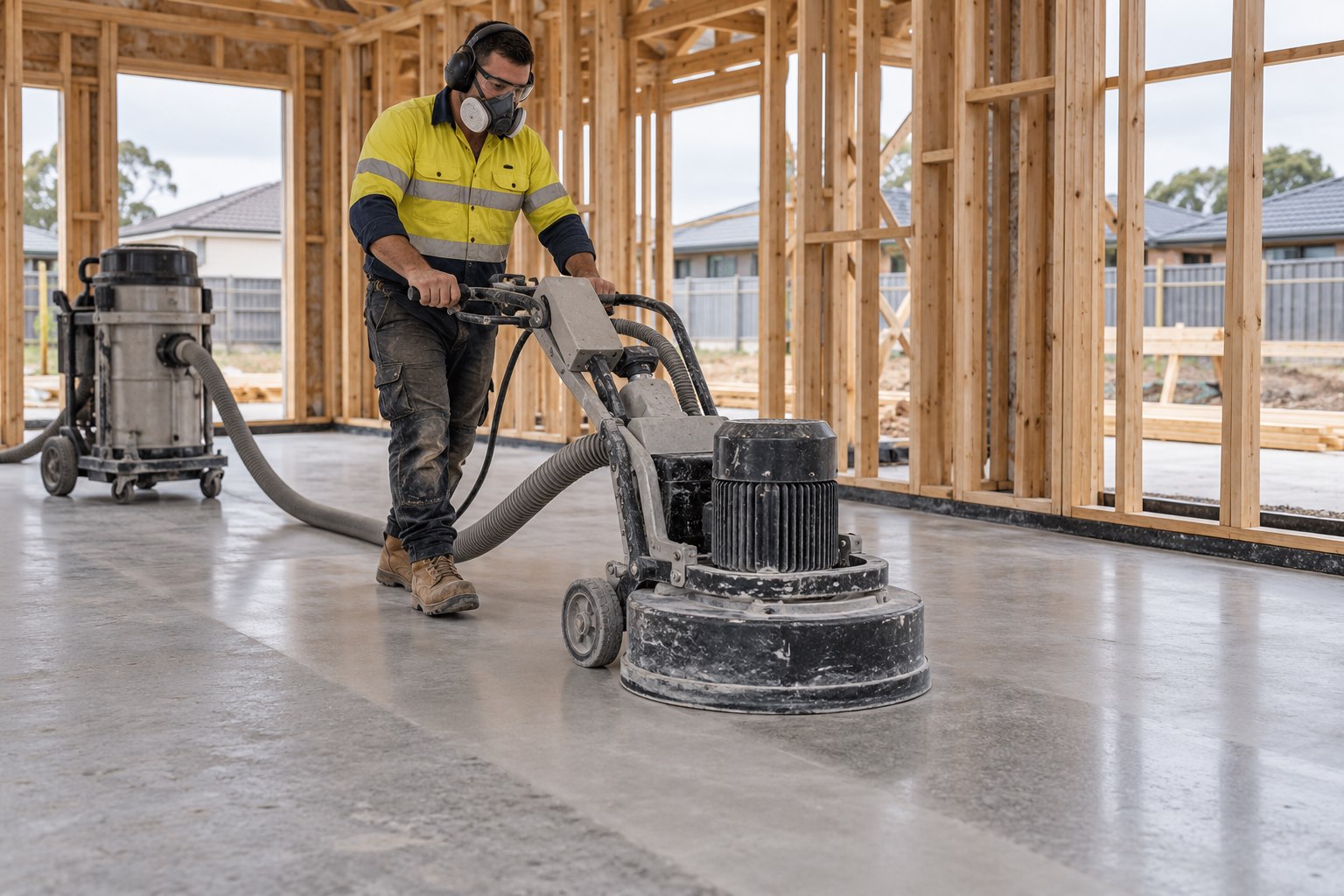
In a new home, polished concrete floors start at the slab design, because the mix, colour, aggregate, heating and joints are all set before the pour.
Decide these before the slab is poured:
During the build, the slab needs protecting from trades, equipment and spills, since any damage becomes part of the finished floor. Agree with your builder in writing when the floor will be ground and polished, how it will be protected, and what finish to expect. Concrete is a natural material, so natural variation and fine cracks can appear even in a well-built slab. Discussing this upfront avoids disappointment at handover.
In an existing home, the old floor coverings are removed and the slab is assessed for cracks, patches, glue residue and level changes. Tyrolit notes that cracks are mapped and repaired before polishing, and that damaged slabs add cost. Where the existing slab is in poor condition, a screed or overlay is an alternative. For major works, it is worth weighing renovating against rebuilding.
Use a polished finish in dry living areas and a honed finish where floors get wet, and make sure stairs meet the NCC slip resistance ratings.
Polished concrete needs regular dust mopping, occasional damp cleaning with a pH-neutral cleaner, and resealing every few years for sealed finishes.
Boral recommends:
Felt pads under furniture and mats at external doors reduce scratching, and rugs help with comfort and sound.
In Melbourne, What's The Damage puts polishing an existing slab at $63 to $180 per m² and a new slab with mechanical polish at $170 to $275 per m².
By finish, Airtasker lists national averages of about $50 per m² for grind and seal, $75 for honed and $100 for a mechanical polish (updated June 2025). It also lists extras: about $25 to $50 per m² to remove existing flooring, about $100 for concrete repairs and about $48 per m² for a screed or overlay.
The main cost drivers are:
Which is cheaper, tiles or polished concrete? There is no reliable like-for-like comparison, because it depends on the tile, the finish level and the slab. On a new build, though, the slab is already part of the house, so a polished finish uses the structure you are paying for rather than adding a second floor material on top.
All of these figures are third-party estimates, not quotes, and not ROMAAC pricing. On a new home, the floor is priced as part of the slab and finishes schedule.
Polished concrete floors look best when the finish, aggregate, colour, heating and joints are designed into the slab from the start. ROMAAC Group plans floor finishes with the structure as part of its custom home construction, architectural design and interior design and finishing work across Melbourne. Contact ROMAAC Group to talk through polished concrete for your home.
What's The Damage (verified October 2026, GST included) puts polishing an existing slab at $63 to $180 per m², typically $115. A new slab poured and mechanically polished is $170 to $275 per m², typically $220. The finish level, aggregate exposure, floor area and slab condition all change the price.
They can feel cool underfoot without heating, but concrete is a thermal mass material that stores heat. With winter sun reaching the floor or in-slab hydronic heating, polished concrete can feel warm in winter. Rugs in living areas and bedrooms also help with comfort and sound.
Smooth, highly polished concrete can be slippery when wet, so it is best kept to dry indoor areas. Honed concrete has more grip and suits bathrooms, laundries and outdoor areas. Stairs must meet the NCC slip resistance ratings: P3 or R10 for dry treads and P4 or R11 for wet treads.
Both are ground concrete. Honed concrete stops at a matte, textured finish with more grip, suited to outdoor areas, pools and bathrooms. Polished concrete is ground through finer grits to a satin or high-gloss sheen, suited to living areas and kitchens. Many homes use polished inside and honed in wet and outdoor areas.
Concrete can develop fine cracks as it dries, and polishing makes the surface visible rather than covering it. Joints are placed to control where cracking happens, and the QBCC notes they help minimise cracking during drying. Discuss joint layout and what to expect with your builder before the slab is poured.
Yes. Once carpet, tiles or timber are removed, the slab is assessed and repaired, then ground and polished or sealed. The look depends on the existing concrete, so colour and aggregate are less predictable than on a new slab. In Melbourne, What's The Damage puts the typical cost at about $115 per m².


