


Latest articles

Follow Us


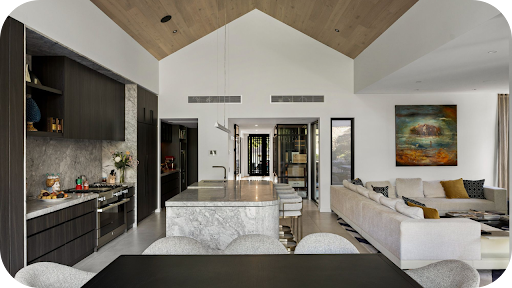

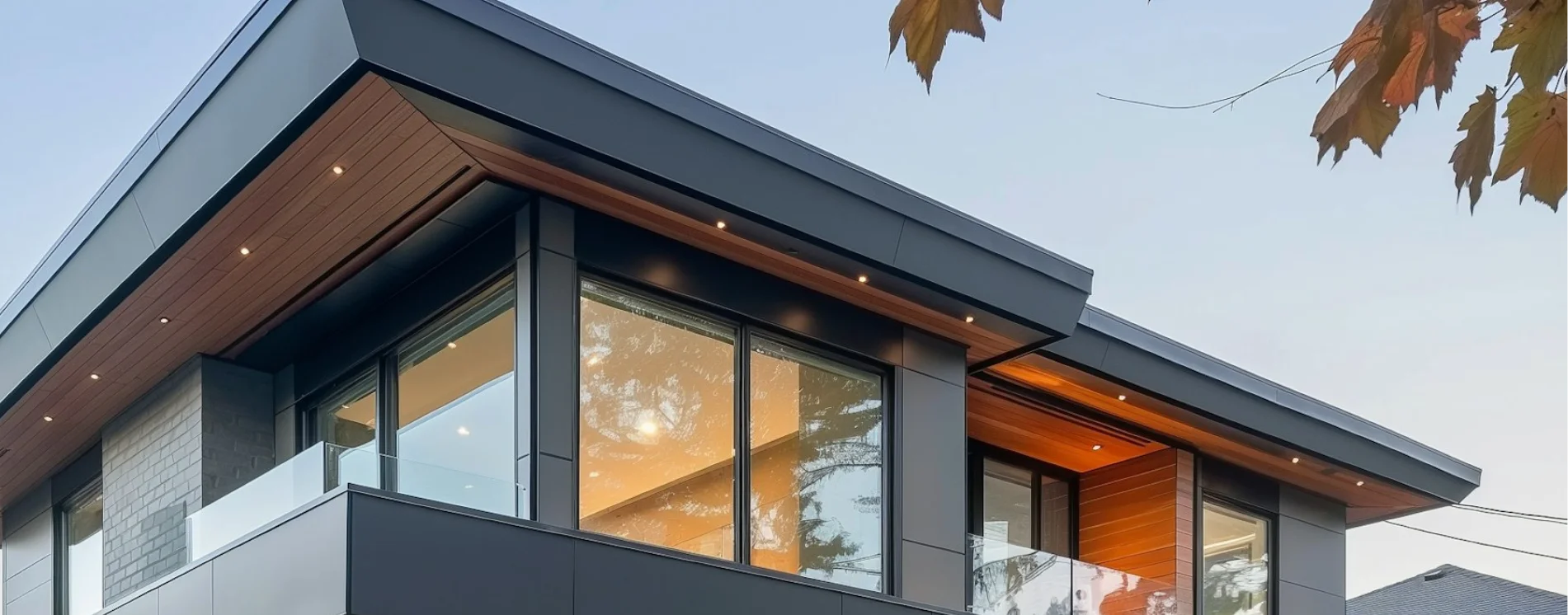
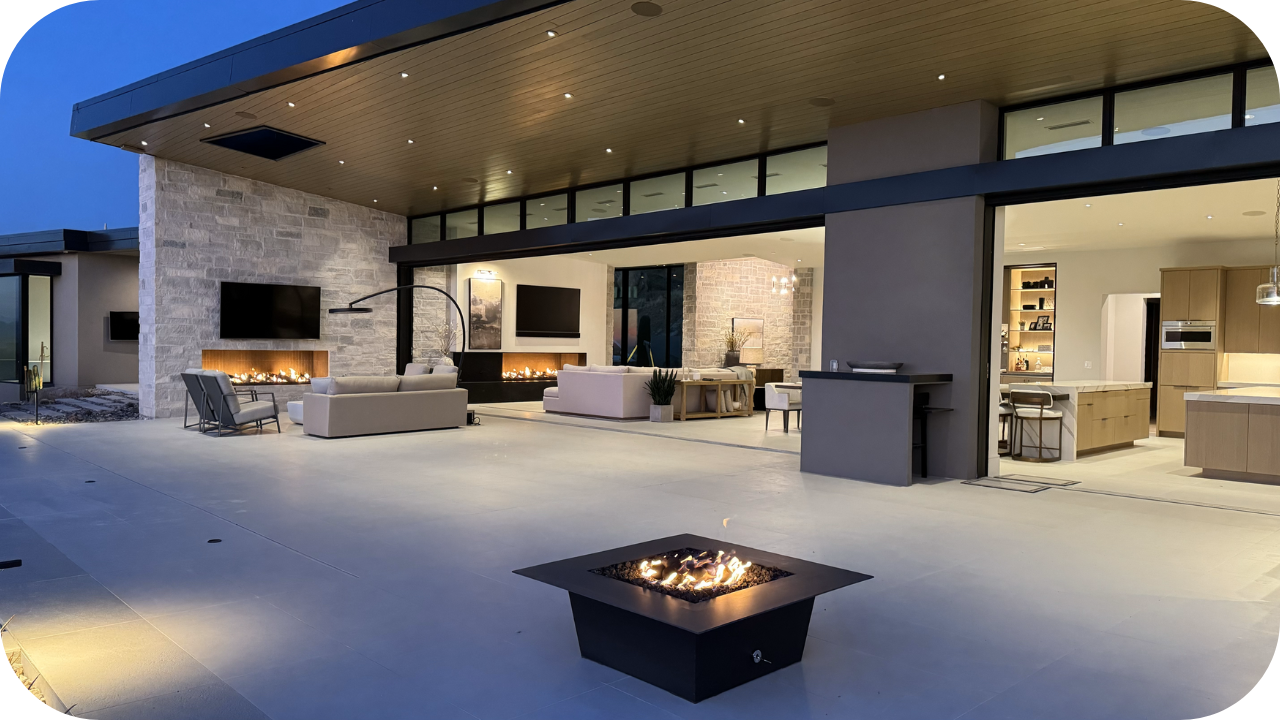
Interior finishes are the surfaces you see and touch inside a home: flooring, wall linings, joinery, benchtops, tiles, paint and fixtures. Choose them in order, floors first, because each choice fixes levels, dimensions or colours for the next. This guide compares the main flooring, wall, benchtop and timber options for Australian homes, and the rules that limit them.
ROMAAC Group builds custom homes and renovations in Victoria and Queensland, so the rules below come from those two states.
Rules in this article were checked on 13 November 2026.
Interior finishes cover every visible surface that goes on once the structure and linings are in place. Choose them in this order:
Selections should be locked in before the building contract is signed. In Victoria, an item that is listed in the contract but not yet chosen becomes a prime cost item, which is an allowance and not a fixed price. Consumer Affairs Victoria's building contracts checklist describes these as selections of fixtures and fittings, such as ovens, taps and tiles, where "you could only estimate the price, which could be less than the final cost". Its advice is to avoid them where possible and to list the make, model, colour and style of each selection in the contract.
Late changes also undo detailing that depends on a material's thickness or size, which is why early selection is part of how a high-end architectural finish is achieved.
The main flooring options in Australia are engineered timber, solid timber, hybrid and laminate boards, tile and natural stone, polished concrete and carpet. The table sets out where each one suits, how it wears and the main caution.
| Flooring | Where it suits | Wear and upkeep | Main caution |
|---|---|---|---|
| Engineered timber (a timber wear layer over a plywood or timber core) | Living areas, bedrooms and hallways, including over concrete slabs | Wears like the species on top. Can be sanded and recoated a limited number of times, set by the wear layer thickness | Check the wear layer thickness and the maker's position on slab heating. Not a wet area floor |
| Solid timber (boards milled from one piece) | Living areas, bedrooms, and extensions matching existing boards | Can be sanded and recoated repeatedly | Shrinks and swells with the seasons, so small gaps are normal. Needs a dry subfloor |
| Hybrid and laminate (a printed timber-look layer over a rigid composite core for hybrid, or fibreboard for laminate) | Family rooms and tighter budgets | Sweep and damp mop. Cannot be sanded, so a damaged board is replaced | Water resistance varies by product, so read the warranty before using it in a kitchen or laundry |
| Tile and natural stone | Wet areas, kitchens, entries and floors that run out to a terrace | Porcelain is very hard wearing. Grout needs cleaning, and many natural stones are sealed | Hard and cool underfoot. Needs a flat base and a planned set-out. Stone varies between batches |
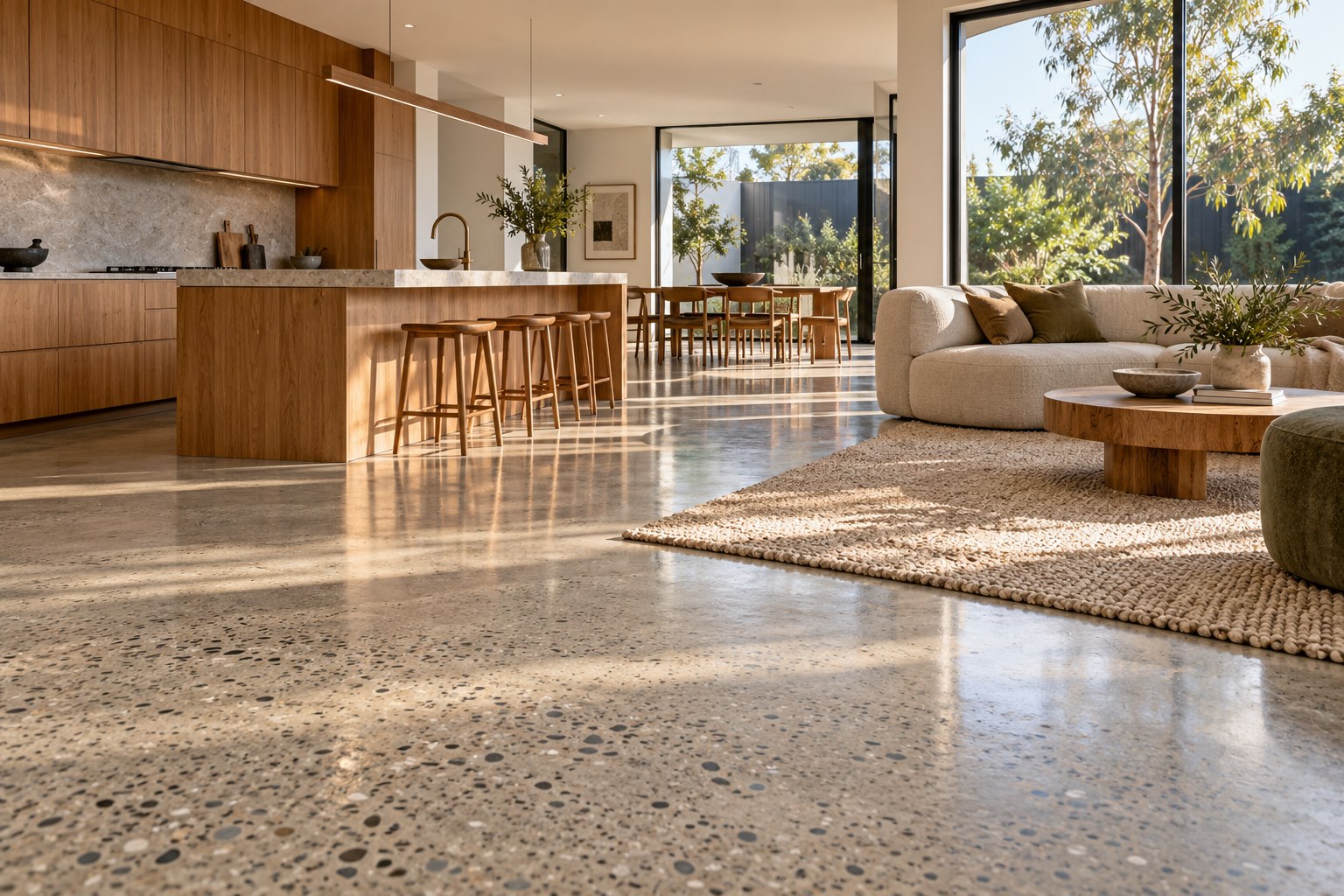
| Polished concrete | Slab-on-ground living areas | Hard wearing. Upkeep depends on whether it is mechanically polished or sealed with a coating | Must be decided before the slab is poured. Hairline cracks and colour variation are part of the result |
| Carpet | Bedrooms, media rooms and stairs | Soft, warm and quiet. Needs regular vacuuming | Holds dust and stains more readily than a hard floor |
Polished concrete cannot be added late, because the mix, the pour and the curing are the finish. The guide to polished concrete floors covers the finish types.
WoodSolutions, the timber industry's technical resource, says in its guide to timber flooring that timber "is no different to other hard flooring surfaces and will freely transfer impact sounds", so ask about acoustic underlay beneath a hard floor upstairs. Over slab heating, it advises that engineered timber "may be preferable as less dimensional changes can be expected".
On cost, laminate, hybrid and most carpet sit at the lower end, engineered timber and porcelain tile in the middle, and solid hardwood and natural stone at the higher end.
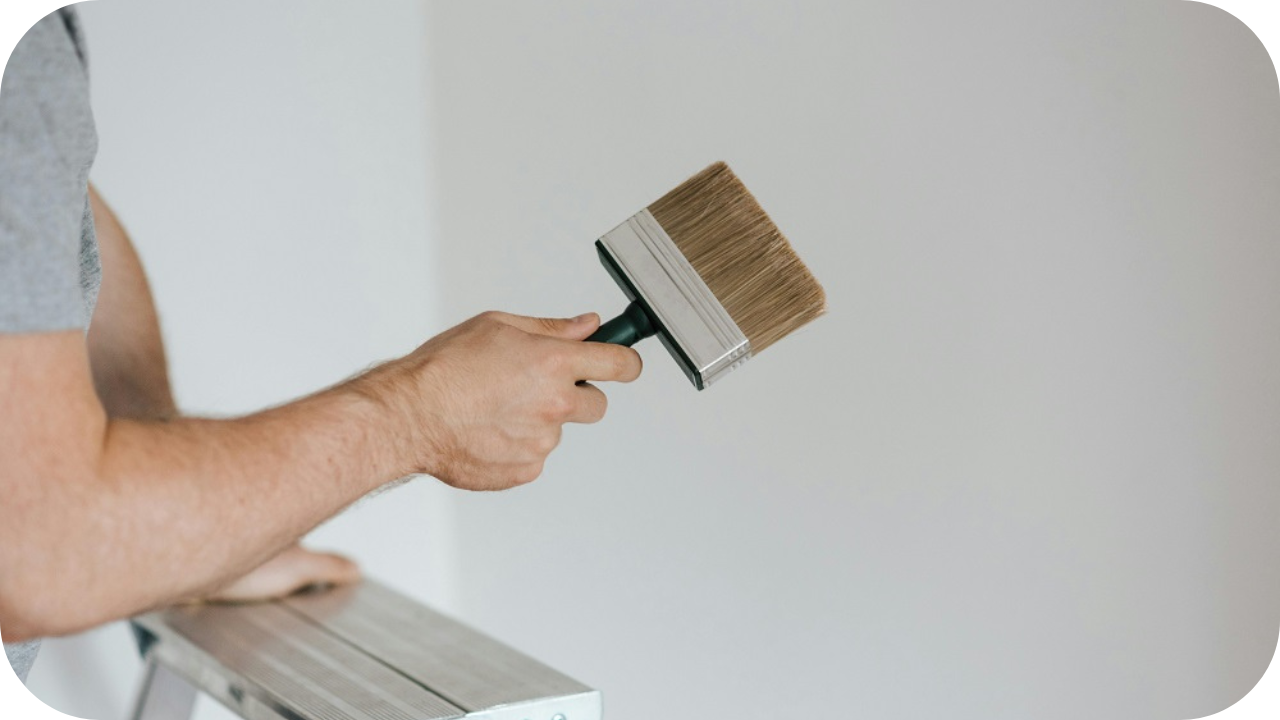
Painted plasterboard is the standard interior wall finish in Australian homes. The other interior wall finishes are usually kept for selected walls where texture, durability or water resistance justifies the extra cost.
| Wall finish | Where it suits | Upkeep | Main caution |
|---|---|---|---|
| Painted plasterboard | Every room | Wipe, touch up and repaint as it wears | Shows flaws in the plaster beneath when light rakes along the wall, so the plaster finish has to suit the lighting |
| Feature plaster and render finishes, such as Venetian plaster (lime-based, built up in thin burnished layers) and microcement (a thin cement-based trowelled coating) | Feature walls, fireplace surrounds and powder rooms | Usually sealed or waxed, then wiped clean | Depends on a skilled applicator, and patch repairs are hard to blend |
| Timber lining and panelling (solid boards, battens or veneered panels) | Studies, hallways, bedhead walls and ceilings | Dusting, with an occasional recoat for oiled finishes | Changes colour in sunlight and moves with humidity. Keep it clear of splash zones |
| Tile | Showers, bathroom and laundry walls, and splashbacks | Easy to wipe. Grout needs periodic cleaning | Set-out decides the result, so plan where cuts fall and how joints meet niches, taps and benchtops |
| Stone cladding (slab or thin stone veneer) | Fireplaces, entry walls and bathrooms | Depends on the stone. Acidic cleaners can mark marble and limestone | Heavy, so the wall structure and fixing method need to be confirmed by the installer or a structural engineer |
Feature finishes work hardest on the walls people face or pass closely, such as an entry, a fireplace or a bedhead wall. The guide to feature wall ideas for luxury homes goes further into stone, timber and plaster options.
The kitchen benchtop materials available in Australia today are natural stone, porcelain and sintered stone, solid surface, timber, stainless steel, laminate and concrete. Engineered stone, often sold as quartz or reconstituted stone, can no longer be supplied or installed, so many older benchtop guides are out of date.
Since 1 July 2024, engineered stone benchtops cannot be made, supplied, processed or installed in Victoria or Queensland. WorkSafe Victoria's engineered stone ban guidance puts it plainly: "Any work involving manufacturing, supply, processing or installation of engineered stone benchtops, panels or slabs is now banned." It applies "even if you entered into a contract before that date". The ban followed a unanimous decision by Australia's work health and safety ministers, and Workplace Health and Safety Queensland's page on the ban confirms that "There is no transitional period in Queensland."
The ban turns on a definition. In Victoria, engineered stone is an artificial product that contains one per cent or more crystalline silica, is made by combining natural stone materials with other constituents such as water, resins or pigments, and becomes hardened. WorkSafe Victoria lists what the definition does not include, among them:
Products with less than one per cent crystalline silica are also outside the definition, which is why low-silica and silica-free surfaces are now sold as replacements. Natural stone is not an artificial product, so granite, marble and quartzite slabs are not caught by the ban. Ask the supplier for the safety data sheet of any manufactured surface before it goes into your contract.
An existing engineered stone benchtop can stay where it is. WorkSafe Victoria says installed products "do not pose an ongoing safety risk", and that repairs, modification, removal and disposal remain permitted when a qualified tradesperson does the work with dust controls. In a renovation, a benchtop that is temporarily removed may go back in the same place, but "It is illegal to remove an existing engineered stone benchtop and install it in a new location." Queensland approved a similar reinstallation exemption, with conditions, on 13 January 2025.

| Material | Strengths | Upkeep | Main caution |
|---|---|---|---|
| Granite (natural stone) | Hard and heat tolerant, in many colours | Usually sealed. Wipe with a pH-neutral cleaner | Every slab differs, so choose the actual slab |
| Marble (natural stone) | Soft veining and a surface that develops a patina with use | Usually sealed, with spills wiped promptly | Acids such as lemon juice, vinegar and wine etch the surface, and it can stain |
| Quartzite (natural stone) | A hard natural stone, often with marble-like veining | Usually sealed. Ask the supplier how often to reseal | The name is used loosely, so confirm the slab is true quartzite. It is not quartz, the old trade name for engineered stone |
| Porcelain and sintered stone | Thin, dense slabs fired at high temperature. Heat and stain resistant | No sealing. Wipe clean | Edges and corners can chip. Patterns are often printed on the surface only, so edges and mitres need planning |
| Solid surface (acrylic-based) | Inconspicuous joins, integrated sinks and curved shapes | Wipe clean. Light scratches can usually be sanded out | Scratches and marks from hot pans more easily than stone |
| Timber | Warm to touch and to look at. Can be sanded and refinished | Re-oil or recoat as the finish wears | Standing water and heat mark it, especially around the sink |
| Stainless steel | Heat tolerant and hygienic, with sinks welded in | Wipe clean. Fine scratches blend into an overall patina | Shows fingerprints and scratches from the first day |
| Laminate | The widest range of colours and patterns, at the lowest cost | Wipe clean. No sealing | Heat and knife damage cannot be repaired, and water in the joins swells the board beneath |
| Concrete | Made to any shape, precast or poured in place | Sealed, and resealed as the sealer wears | Heavy, so cabinets must be built for the load. Can stain and develop hairline cracks |
Laminate is generally the lowest-cost benchtop, and natural stone and large-format porcelain the highest, with fabrication (cut-outs, edge profiles and joins) a large part of any stone or porcelain price. Benchtop selection is one step in the sequence set out in the guide to luxury kitchen renovations in Melbourne.
A timber interior finish is two decisions: the species, which sets colour and hardness, and the coating, which sets sheen and upkeep. Hardness matters most on floors. WoodSolutions puts it this way: "The selection of a hard timber species improves resistance to indentation and abrasion." It adds that "Floor finishes will not significantly alter the hardness of timber flooring", so a coating cannot make a soft timber dent-proof.
The table lists species often used in Australian interiors. The hardness figures are the seasoned values on each WoodSolutions species page, which come from the Janka test, a measure of resistance to indentation. A higher figure means the timber resists dents better.
| Species | Colour | Seasoned hardness (Janka test) | Interior uses listed by WoodSolutions |
|---|---|---|---|
| Spotted gum | Light brown through to dark red-brown | 10.1 | Flooring, lining and veneer |
| Blackbutt | Golden yellow to pale brown | 8.9 | Flooring and joinery |
| Jarrah | Rich reds to browns | 8.5 | Flooring, linings, joinery and furniture |
| American white oak (imported) | Light to dark brown | 6 | Flooring, architectural joinery, furniture and panelling |
| Tasmanian oak | Straw to reddish brown | 4.9 | Panelling, flooring and furniture |
On an engineered floor, the figure that counts is the wear layer's species. WoodSolutions groups floor coatings into a few families:
To check whether a coated floor needs attention, WoodSolutions suggests placing a few drops of water on the most worn area. If the water beads, the finish is intact. If it soaks in and darkens the timber, a recoat is due.
Pale timber with a matt finish is also the base of Japandi interior design, where a restrained palette puts the grain on show.
In a bathroom or laundry, the tile or stone is only the visible layer. The waterproofing beneath it is the regulated part, and it has to be right before any finish goes on.
The National Construction Code defines wet areas as bathrooms, showers, laundries and sanitary compartments, and the Australian Building Codes Board's waterproofing FAQ confirms that kitchens fall outside that definition. Under the code's wet area waterproofing provisions, the floor of a shower must be waterproof and its walls "must be waterproof not less than 1800 mm above the floor substrate". In Victoria, the Building and Plumbing Commission's guidance on waterproofing wet areas names the accepted routes: Australian Standard AS 3740, Waterproofing of domestic wet areas, or Part 10.2 of the ABCB Housing Provisions.
Waterproofing is specialist work. Victoria registers it as its own class of building practitioner, Domestic Builder (limited to waterproofing), and the membrane should be applied by a suitably qualified person. It also needs to be checked before it is covered. The Commission notes that "A visual inspection can be conducted prior to the installation of any finish to ensure the integrity of the membrane." Ask your builder who applies the membrane, who inspects it and what record you will receive, and confirm the inspection stages with your registered building surveyor.
A decorative coating such as microcement does not replace the membrane, so ask the applicator which waterproofing system sits beneath it.
New finishes release volatile organic compounds (VOCs) into indoor air, so choose low-emission products and ventilate well after installation. The Australian Government's Your Home guide to indoor air quality notes that "Most off-gassing occurs when products are new or freshly installed, after which it lessens dramatically over time." It recommends coatings that are water based or classed as zero or low VOC, joinery boards marked low formaldehyde emission, LFE (E1) or LFE (E0), and carpets sold as low-emission products. Where a material comes from matters too, and the guide to sustainable building materials covers certified and recycled options.
Run every shortlisted finish through five checks before it goes into the specification.
Choose interior finishes before the contract is signed, working from the floor up, and have each selection written into the specification by make, model and colour. That keeps the price firm and gives the builder the dimensions the details depend on.
ROMAAC Group offers interior design and finishing as part of its custom home and renovation work in Victoria and Queensland. To talk through the finishes for your project, make an enquiry with ROMAAC.



