


Latest articles

Follow Us


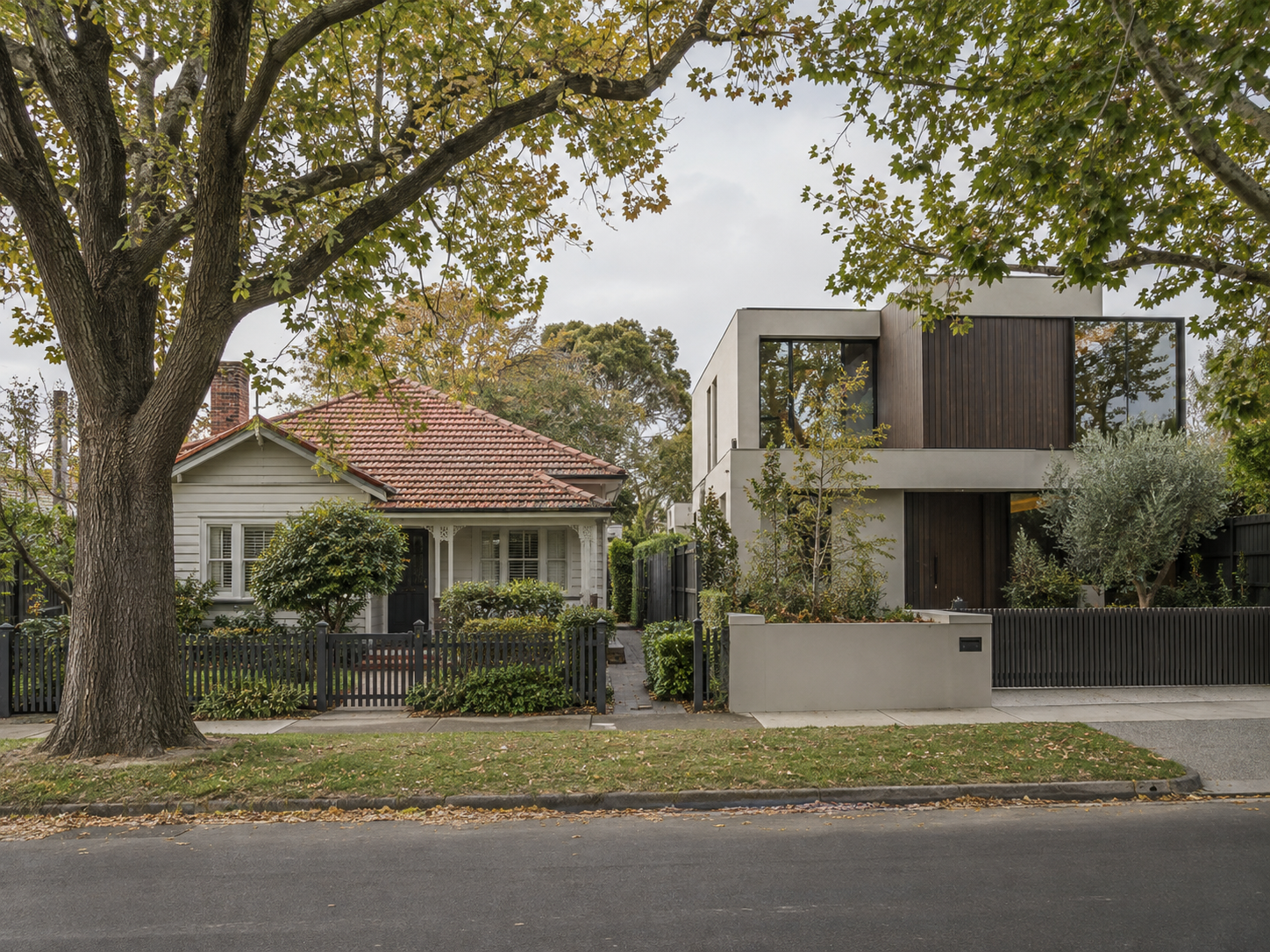
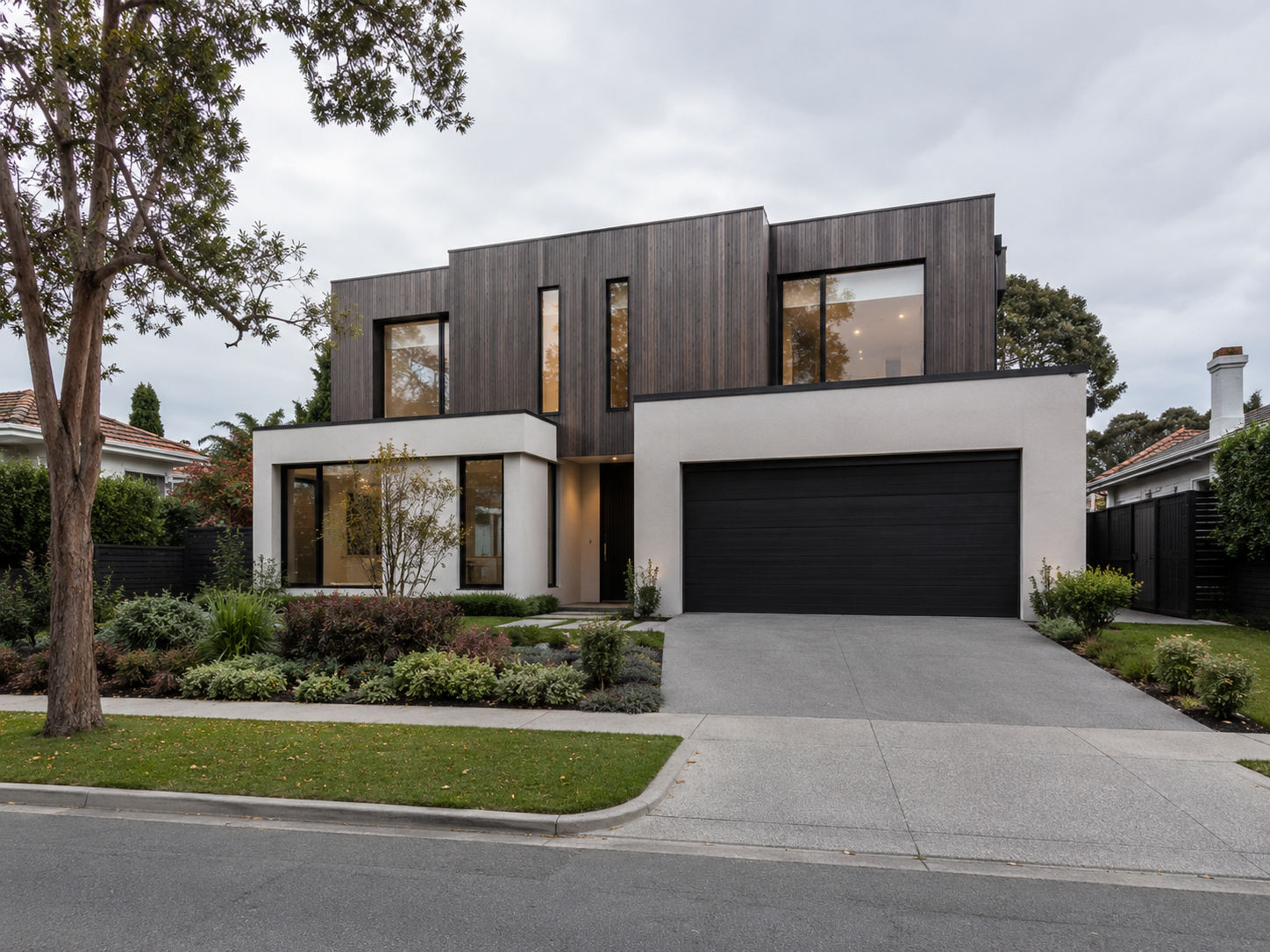
A knockdown rebuild can make more sense than buying an established home if you already own a suitable block, want to remain in your neighbourhood and need a home designed around your lifestyle. Buying an established home is often the simpler option when you want to move sooner, avoid managing a construction project or find a property that already meets most of your requirements.
The financial comparison is less straightforward.
Buying another property involves more than its advertised price. There may be stamp duty, selling costs, immediate repairs and renovations needed to make the house suitable.
A knockdown rebuild involves demolition, design, approvals, construction, temporary accommodation and the risks associated with building on an established site.
For Melbourne homeowners, the better choice depends on the property you already own, the type of home you want and how much you are prepared to spend to achieve it.
This guide compares both options across costs, location, design flexibility, timing and long-term value, with particular attention to custom homes in Melbourne's established suburbs.
Neither approach is automatically cheaper or better.
The key is to assess both against the same desired outcome. Comparing a basic rebuild with a fully renovated luxury property, for example, will not produce a useful answer.
A knockdown rebuild involves demolishing an existing home and constructing a replacement dwelling on the same block.
For homeowners who already own their property, it offers the opportunity to retain a familiar location while replacing an ageing or unsuitable house.
The existing building is removed, and the new home is designed around the site's dimensions, orientation, planning controls and the household's requirements.
This is different from renovating because the replacement home does not need to retain the original building's layout or structural elements.
Buying an established home means purchasing an existing property, usually one that is already habitable.
You can inspect the finished house, evaluate its location and assess its layout before making an offer.
However, the available properties may not provide the exact combination of floor plan, materials, natural light, storage and architectural features you want.
For homeowners deciding between these options, the first question is not simply which one costs less.
It is whether an existing property can realistically deliver the same long-term outcome as a purpose-designed home.
The most useful comparison is the total amount required to own and occupy a home that meets your needs.
A purchase price is not the total cost of buying an established property.
Likewise, a construction quotation is not the entire cost of a knockdown rebuild.
A knockdown rebuild budget may include:
For an architecturally designed custom home, design complexity and the level of specification can significantly affect the budget.
A relatively straightforward replacement dwelling on a level, accessible site will have different cost drivers from a multi-storey residence involving a sloping block, extensive glazing and specialised structural work.
The knockdown rebuild process in Melbourne also involves feasibility, approval and demolition stages that need to be accounted for before construction begins.
An established property purchase can involve:
A well-maintained house that already meets your requirements may need little additional investment.
However, a property purchased primarily for its location may require substantial work to achieve the desired living standard.
Older bathrooms, kitchens, roofing, heating systems and electrical installations can all add to the amount spent after settlement.
The important comparison is therefore between two completed outcomes, not two starting prices.
Stamp duty can be one of the most significant additional costs when purchasing another property in Victoria.
The Victorian State Revenue Office generally calculates land transfer duty using the property's dutiable value, which is usually the greater of the purchase price and market value.
The amount depends on the property's value, the buyer's circumstances and any available exemptions or concessions.
Consider a homeowner who already owns a suitable Melbourne block.
If they demolish the existing home and rebuild on land they continue to own, there is generally no new land purchase simply because they are rebuilding. Therefore, the rebuild itself does not ordinarily create a new land transfer duty liability.
If they sell their current property and buy another established home, the new purchase will generally attract land transfer duty.
That duty is an additional transaction cost that does not directly improve the new property's condition or design.
For high-value Melbourne homes, this can represent a substantial amount.
The State Revenue Office's stamp duty calculator can help estimate the amount payable based on the property and purchaser's circumstances.
There is an important distinction here: if you purchase an older property specifically to demolish and rebuild, land transfer duty will generally apply to that acquisition.
A knockdown rebuild does not automatically avoid stamp duty. The potential saving is most relevant when you already own the land.
Practical takeaway: If you are considering moving solely because your current house no longer works for your family, calculate the transaction costs before assuming that buying another property is the more economical option.
Consider a hypothetical homeowner who owns a property in Melbourne's eastern suburbs.
The existing house is ageing, but the block is suitable for a new custom home.
The owner is comparing two options:
The following example uses illustrative amounts to show how the comparison works. These are not market quotations or typical project costs.
Important: These totals are not directly comparable without accounting for the value of the land already owned, sale proceeds, existing debt, finance and transaction costs. The rebuilt home remains on the original land, while the purchase option involves acquiring a different property.
This is the central financial distinction.
If the existing property is worth $1.4 million, the homeowner already holds an asset with substantial land value.
Rebuilding does not eliminate that value. It adds a new dwelling to the existing asset.
Buying another property involves selling the original asset, accounting for selling expenses and using the proceeds towards the new purchase.
A meaningful comparison must therefore consider:
Without those figures, it is easy to make one option appear cheaper simply by excluding a major part of its cost.
For homeowners seeking a highly personalised residence, design flexibility is one of the strongest reasons to consider a knockdown rebuild.
Buying an established property means accepting a building that was designed for someone else's requirements.
Even a high-quality home may have compromises involving room sizes, circulation, natural light or how the interior connects to outdoor spaces.
A custom rebuild starts with a different question:
What should this home look like and how should it function for the people who will live in it?
Depending on site and planning constraints, a custom home can be designed around:
Rather than adapting your lifestyle to an existing floor plan, the design can be developed around how you want to live.
This does not mean every block allows unlimited flexibility. Setbacks, building height, overlooking, overshadowing, easements and overlays may constrain the design.
Nevertheless, a purpose-designed home generally provides greater freedom than renovating around an existing structure.
The distinction between standard custom, full custom and pre-designed homes becomes particularly relevant when deciding how much control you want over the final outcome.
For many Melbourne homeowners, the decision is driven as much by location as by the house itself.
You might love your street, nearby schools, local shops and transport connections but feel increasingly dissatisfied with your home.
In established suburbs, finding a replacement property in the same neighbourhood can be difficult.
A suitable home may become available only occasionally, particularly where your requirements include a large block, specific orientation or particular architectural features.
A knockdown rebuild may be attractive when:
Buying established may be preferable if your current location no longer supports your needs.
For example, moving closer to work, family, schools or essential services may provide benefits that a new house on the existing block cannot.
The location itself may also be unsuitable for your intended design.
A narrow site, restrictive covenant, significant heritage protection or difficult access may substantially limit what can be built.
The key principle: A knockdown rebuild can replace an unsuitable house, but it cannot solve every limitation of an unsuitable block or location.
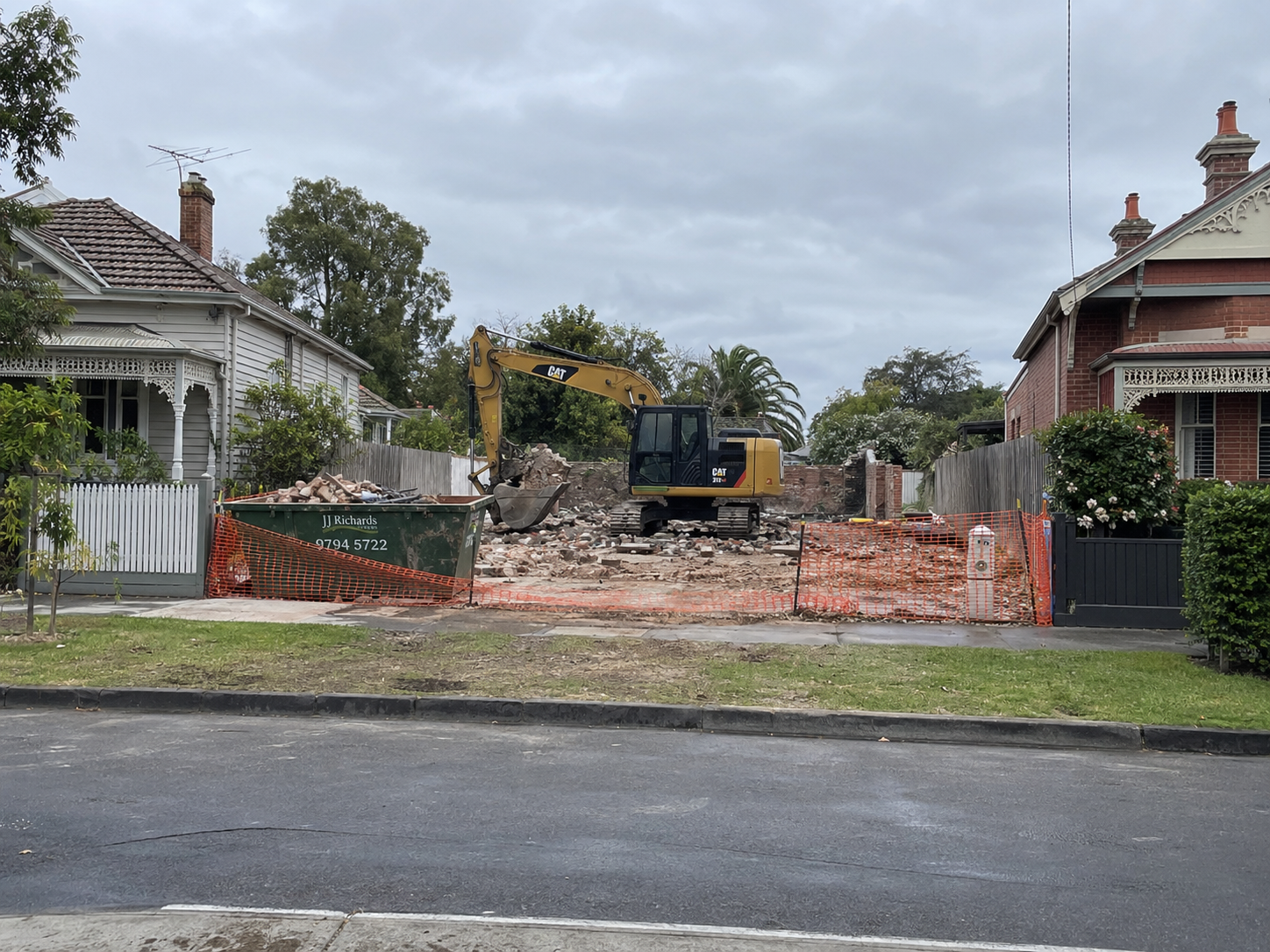
Buying an established home will generally allow you to occupy the property sooner than commissioning a new build.
Once the purchase is finalised and settlement occurs, you can usually move in, provided the property is suitable for occupation.
A knockdown rebuild requires a much longer sequence.
It begins with feasibility and design, followed by necessary approvals, demolition, construction, inspections and handover.
A custom knockdown rebuild can take well over a year from initial planning to handover, depending on approvals, project complexity and construction conditions.
ROMAAC's detailed Melbourne rebuild process outlines indicative stage durations and the factors that can affect the programme.
Those durations should be treated as planning estimates rather than guaranteed construction timeframes.
Time also affects the financial comparison.
During construction, homeowners may need to rent accommodation while continuing to service an existing mortgage and construction funding.
There may also be storage, relocation and insurance expenses.
Buying an established home can reduce this transition period, although coordinating a sale and purchase may introduce its own costs.
If your priority is to move within a short timeframe, the established home option usually has a practical advantage.
A new custom home can be designed to meet current building requirements and incorporate contemporary materials and services.
An established property may include components installed decades earlier.
The difference can affect maintenance, comfort, accessibility and the cost of future upgrades.
Pay attention to:
A recently renovated interior does not necessarily mean the underlying building has been comprehensively upgraded.
Consumer Affairs Victoria recommends considering an independent professional building inspection before purchasing an established home.
A written inspection report can identify defects, potential repairs and issues that warrant further investigation.
See the Victorian Government's guidance on inspecting a property before purchase.
A newly constructed home may avoid some age-related repairs associated with older buildings.
However, all homes require maintenance.
Complex architectural systems, extensive glazing, specialist finishes, landscaping and integrated technology still need appropriate care.
The advantage of a new build is greater control over the products and construction systems selected from the beginning.
For homeowners planning to stay long term, that opportunity can be important when evaluating ongoing ownership costs.
Energy performance is another consideration when deciding whether to buy an established home or rebuild.
A new home provides an opportunity to design the building envelope, glazing, insulation and mechanical systems as part of a coordinated strategy.
In Victoria, applicable energy efficiency requirements depend on the building approval framework and the relevant National Construction Code provisions.
New homes generally need to satisfy current requirements, while existing houses may have been built under earlier standards.
A well-considered custom design can address:
These decisions are often easier to coordinate during design than after construction.
An established property can also be upgraded through insulation, draught sealing, glazing improvements and efficient appliances.
However, the cost and feasibility depend on the existing building.
The strongest comparison considers actual building performance, not simply the age of the house.
A poorly designed new home is not automatically more comfortable than a well-upgraded established property.
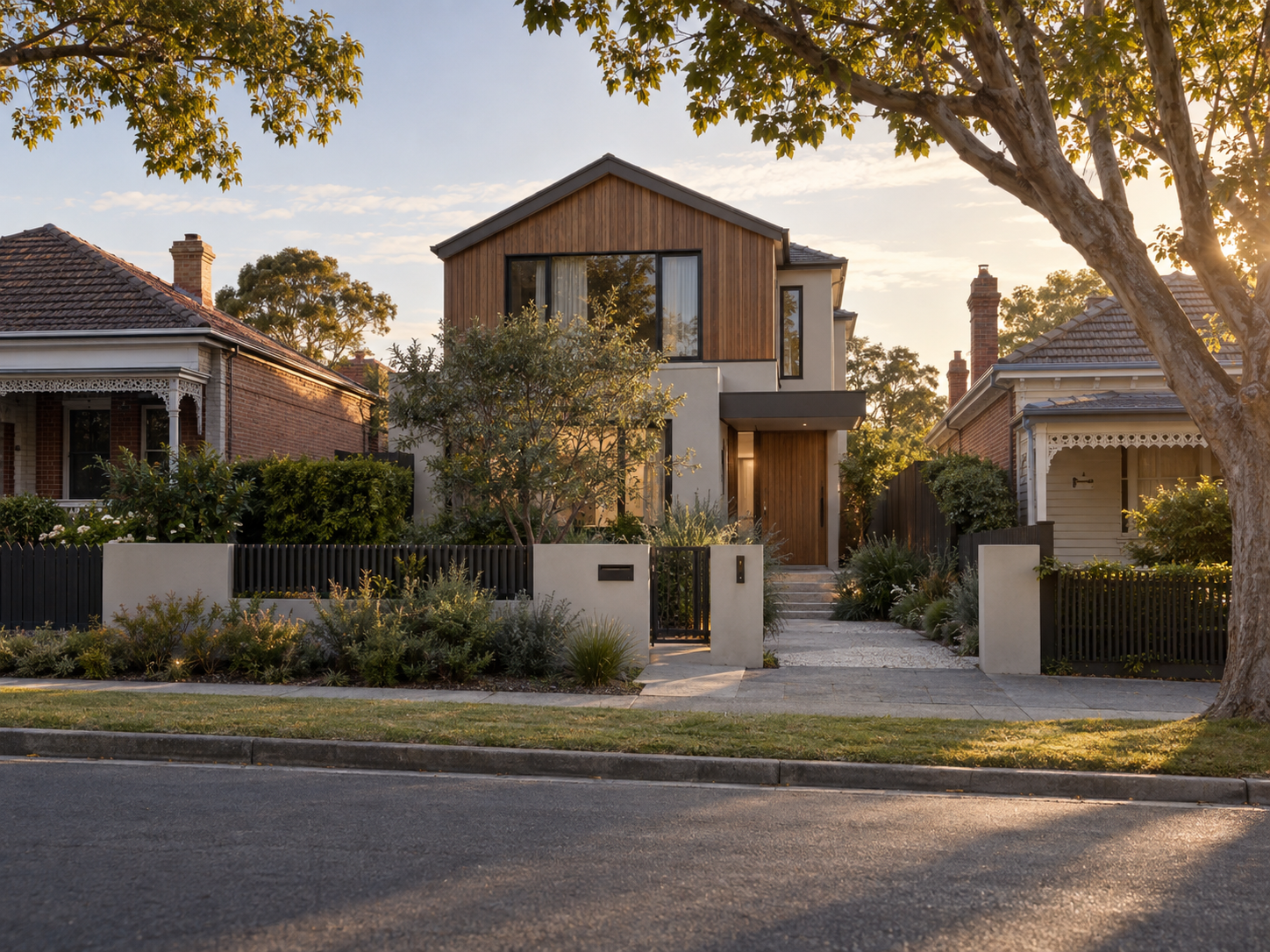
There is a third option that should not be overlooked.
Instead of rebuilding on land you already own or buying a house to live in as it stands, you may purchase an older property primarily for its land.
This approach can be attractive in established Melbourne suburbs where vacant blocks are scarce.
However, purchasing a property for demolition introduces additional risks.
Before making an unconditional commitment, investigate:
An older house being marketed as a redevelopment opportunity does not guarantee that your preferred replacement home can be approved.
Some sites have heritage controls or other restrictions that make full demolition difficult or impossible.
The Victorian planning system provides access to planning information, while the relevant local council can explain applicable controls.
A builder, architect and planning consultant can help assess whether the block is appropriate for the intended project.
Practical takeaway: If you intend to demolish immediately after purchase, assess the property primarily as a development site, not simply as an existing house.
Long-term value is not determined solely by construction cost or purchase price.
A home can also provide value through its location, suitability, condition, functionality and ongoing ownership expenses.
Rebuilding can be compelling where:
The ability to retain the land while replacing the dwelling may be particularly useful where moving would involve significant transaction costs.
An established property may be the stronger option when:
A quality established home can offer excellent long-term value without the cost and disruption of a major building project.
A bespoke design may provide enormous personal value without delivering an equivalent financial return on every dollar spent.
Highly specialised features can be expensive to construct and may not appeal equally to future buyers.
Land value, location, surrounding property values, design quality and market conditions remain important.
Where resale performance is a major consideration, obtaining an independent valuation or local market assessment can help test the assumptions behind a proposed rebuild.
Rather than beginning with a preferred outcome, work through the decision in a practical order.
Identify whether the problem is the layout, size, condition, design or location.
If the location is the main problem, rebuilding may not solve it.
If you love the area but the house no longer works, rebuilding becomes more relevant.
Check planning controls, access, orientation, site conditions and the likely construction constraints.
A preliminary feasibility assessment can establish whether the intended replacement home is realistic.
Estimate the full cost of a rebuild, including demolition, construction, professional fees, accommodation and contingency.
Compare it with the cost of purchasing an established property that meets similar requirements, including stamp duty, selling expenses and necessary improvements.
Determine how long you can reasonably wait before occupying the completed home.
A complex custom build requires more time and involvement than purchasing an existing dwelling.
If you expect to live in the home for decades, the benefits of a purpose-designed layout may carry greater weight.
If you anticipate relocating relatively soon, transaction costs, building expenditure and resale considerations become more important.
A property purchase or custom building contract can involve substantial financial obligations.
Independent advice from a conveyancer, building lawyer, financial adviser, architect or appropriately experienced builder can clarify the risks relevant to your circumstances.
The most useful decision is one based on the actual property, an achievable design and a properly developed budget.
These are starting points, not absolute rules.
A financial comparison and site assessment may change which option makes the most sense.
The important point is that the house, block, location and budget must all work together.
It depends on whether you already own the land, the proposed construction cost, the purchase price of alternative homes and the transaction costs involved.
Rebuilding on a block you already own can avoid the stamp duty associated with purchasing another property, but demolition, construction, accommodation and finance costs must still be considered.
Buying an established home may be more economical when the property requires little additional work.
A knockdown rebuild may be worthwhile if you own a suitable block in a location you want to retain and your existing home no longer meets your needs.
It can provide greater control over design, layout and building performance.
Its financial value depends on the total project cost, the land, local property values and how long you intend to stay.
Generally, demolishing and rebuilding on land you already own does not itself involve a new property transfer that attracts land transfer duty.
However, if you purchase an established property to demolish and rebuild, stamp duty will generally apply to the purchase.
Individual circumstances and available exemptions should be confirmed with the State Revenue Office or a qualified adviser.
A custom knockdown rebuild can take well over a year from initial planning to completion.
The timeframe depends on design complexity, site investigations, planning requirements, demolition preparation, construction and inspections.
Projects involving heritage restrictions, difficult access or complex architectural designs can take longer.
No. Demolition is subject to applicable Victorian building and planning requirements.
Heritage overlays, covenants, planning controls and other site restrictions may affect whether a house can be demolished or replaced.
Check the property's planning status and obtain professional feasibility advice before committing to a rebuild.
Not necessarily.
A new home offers the opportunity for contemporary design, new building systems and compliance with current requirements.
An established home may offer strong construction quality, a desirable location and a functional layout without requiring major work.
The better choice depends on the condition and suitability of the individual properties.
Renovation is often worth considering when the existing structure is sound and the required changes are achievable.
Rebuilding may be more appropriate where the house has significant limitations but the land is worth retaining.
Buying another home may make more sense where location, time or redevelopment constraints make the other options unattractive.
The decision between renovating and rebuilding an established Melbourne home is best informed by an assessment of the structure, site and desired outcome.
A successful knockdown rebuild begins well before demolition.
The first challenge is establishing what the block can support, what the replacement home should achieve and how the design can be delivered within a realistic budget.
RO MAAC Group specialises in bespoke residential construction, including architecturally designed homes and projects that require careful coordination of site conditions, structural requirements and detailed finishes.
Whether you already own an established Melbourne property or are considering purchasing a block for redevelopment, early planning can help you understand the opportunities and constraints before making major financial commitments.
Explore ROMAAC Group's custom home construction services or contact the team to discuss your site, design priorities and next steps.

.svg)

.png)
