


Latest articles
Follow Us


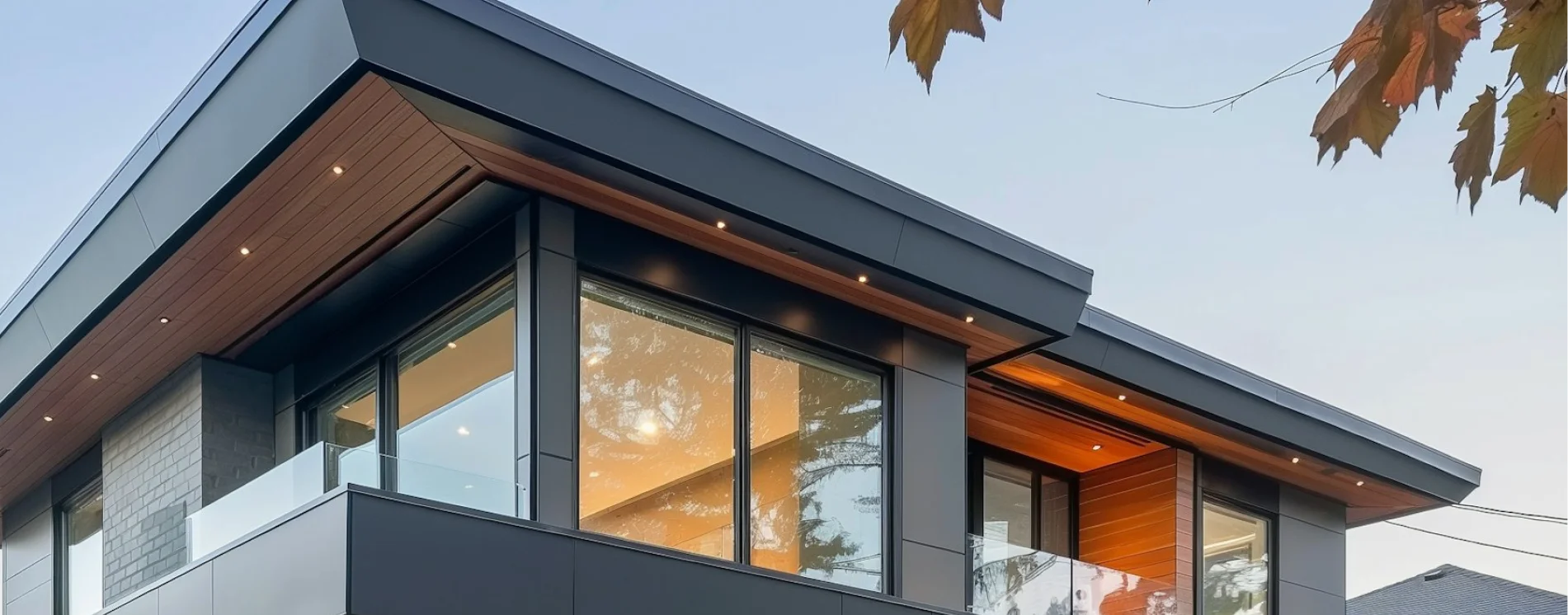
Choosing a luxury home builder in Melbourne comes down to five checks you can finish in an afternoon: confirm the builder is currently registered on the official Victorian register, read the compliance and enforcement register for disciplinary history, read reviews with the right filters applied, compare at least three like-for-like quotes, and work out which warranty scheme covers your contract.
Most home builders Melbourne review results are ranked shortlists; this guide gives you the verification method instead.
It also covers the change that took effect on 1 July 2026, when Victoria moved from Domestic Building Insurance to Home Warranty for new eligible work, which the shortlist articles published last year do not mention.
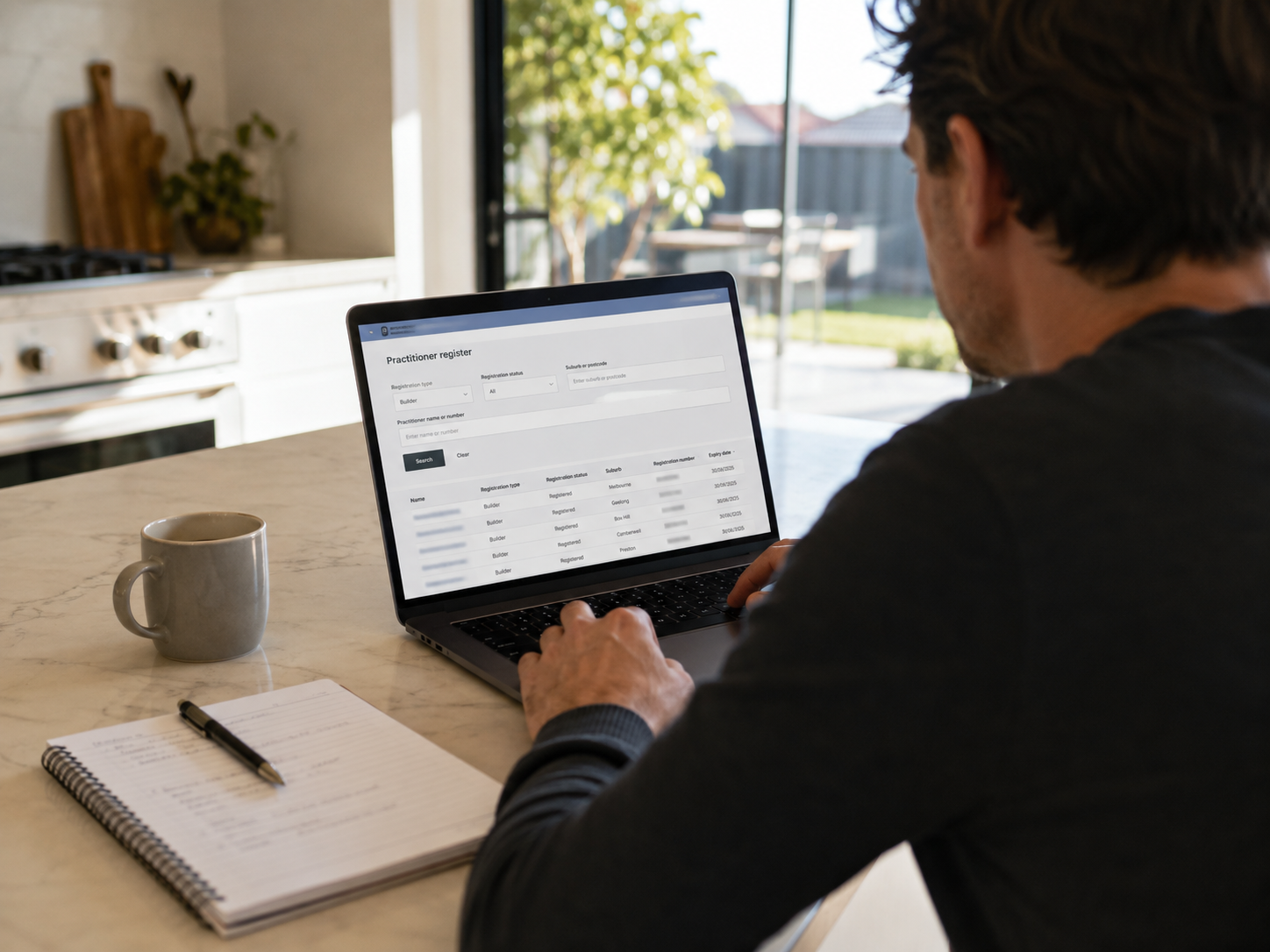
In Victoria, most domestic building work valued at $10,000 or more must be carried out by a practitioner registered or licensed with the Building and Plumbing Commission (BPC), according to the BPC's guidance on finding a practitioner and getting quotes (page last updated 30 June 2026). Registration is the floor, not the finish line, but a builder who fails this check is not a candidate.
The regulator is direct about why you should look it up yourself rather than take the builder's word for it. Its advice on how to find and check a practitioner states: "Do not rely only on advertising, business cards, quotes or what someone tells you. Check their details before signing a contract or allowing work to start."
Four steps, in order:
Do this before the first site meeting, not after you have committed to a design. It takes about ten minutes per builder.
As a worked example, ROMAAC Group holds building licences DB-U 100420 and CD-BU 100477, and both numbers are published on our registration details page along with the registered business address at Unit 2, 2A Cope Street, Preston VIC 3072. Run those numbers through the register the same way you would run any other builder's.
A builder who is uncomfortable with you checking is telling you something useful.
Reviews are useful for detecting patterns of behaviour and close to useless for comparing builders of different types. A home builders Melbourne review search returns mostly raw ratings with no interpretation attached, and interpretation is the part that decides whether a rating means anything.
Four filters change how those reviews read.
Product Review's Victorian home builders directory, Google reviews and Melbourne community forums are all legitimate inputs. None of them is an authority, and none of them applies these filters for you. Treat them as evidence to be weighed rather than a verdict.
These are two different products, and assessing them on the same criteria produces a bad decision. A volume builder sells a refined plan from a range, built repeatedly, with pricing certainty derived from that repetition. A custom builder produces a single design for a single site, which removes the plan range and the pricing certainty that came with it.
Neither model is better in the abstract. If your block is regular, your brief is conventional and predictability matters most, a volume builder is the rational choice. If your site is difficult or your finishes are bespoke, the volume model cannot deliver it and the comparison stops being relevant.
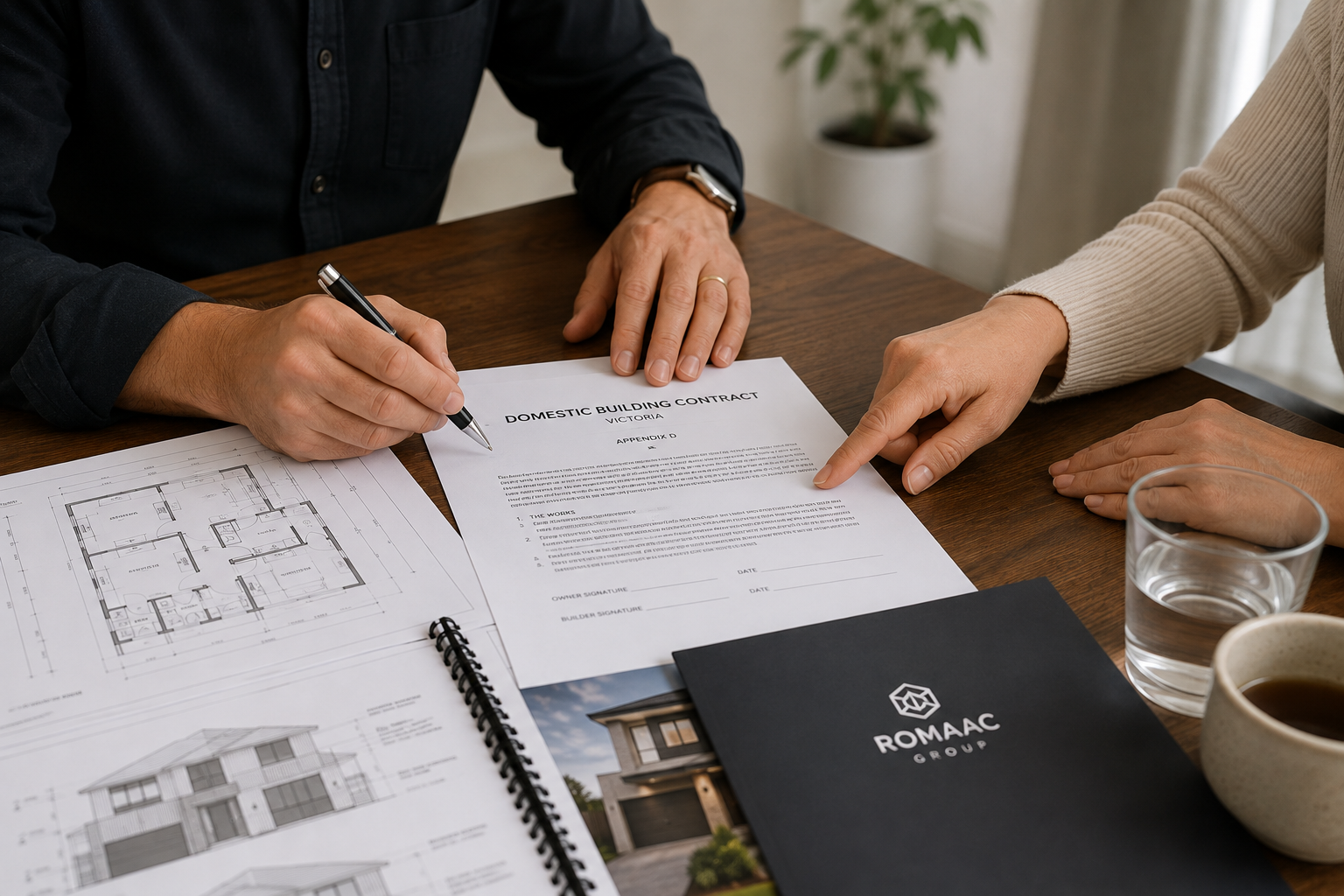
Victoria changed its home building consumer protection scheme on 1 July 2026, and which scheme applies to you depends on the date you sign, not the date you build. According to the BPC page on Domestic Building Insurance and Home Warranty (page last updated 1 July 2026):
Source: Building and Plumbing Commission, current as at the page's 1 July 2026 update.
The practical difference is significant. Under the old scheme, a builder who was still trading but refusing to fix defective work did not trigger the insurance. Under Home Warranty, incomplete, defective or non-compliant work is within scope. The BPC also confirms that a DBI Certificate of Insurance issued before 1 July 2026 continues under that existing policy.
Two things follow for anyone shortlisting now. First, ask any builder which scheme your contract will fall under and get the answer in writing. Second, treat advice published before mid-2026 with caution, including shortlist articles that still describe Domestic Building Insurance as the current scheme.
A comparable quote is one where the scope, the specification and the assumptions are the same across every builder you are asking. The BPC's advice is to "get at least three quotes for the same job", to obtain itemised quotes so hidden expenses surface, and to find at least three independent sources who recommend a practitioner before you select them.
Work through each quote against the same list:
The BPC also names the warning signs: a practitioner who is too cheap, promises too much for the price, is too pushy, or is not specific enough.
On the question everyone asks first, cost: build cost in Melbourne is driven by site conditions and access, the size and complexity of the design, the specification level of finishes and joinery, structural and engineering demands on sloping or constrained blocks, and current trade and material availability.
Those inputs move, sometimes sharply, so any figure quoted in an article is out of date before you read it. ROMAAC does not publish price ranges, and a builder who quotes you a firm figure before seeing your site and your specification is guessing. A pre-construction consultation is where a real number gets built.
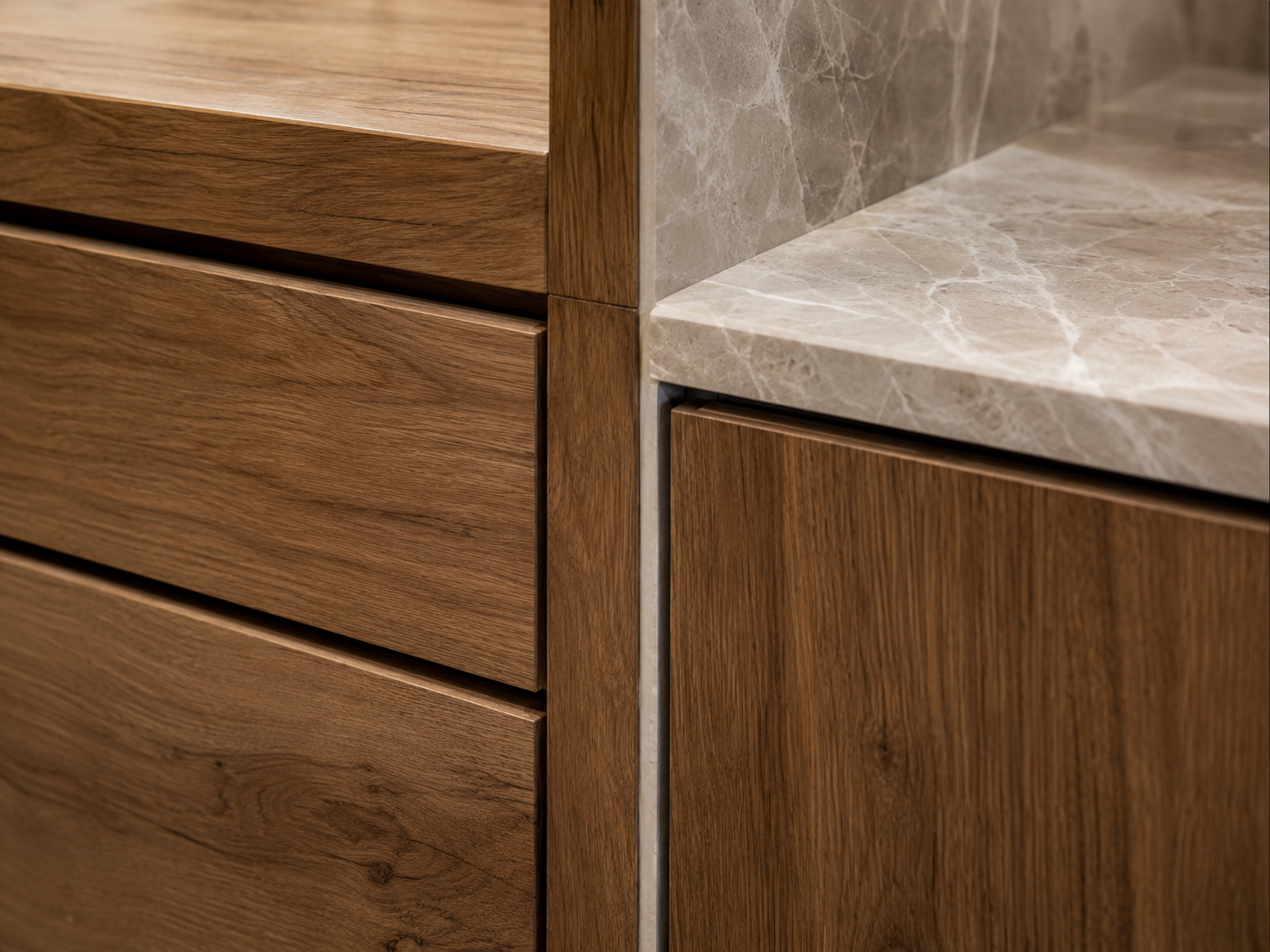
A display home is built to be photographed. A completed home, ideally two or three years old, shows what the builder's work looks like after it has settled and been lived in. Ask to see completed builds.
What to inspect once you are there:
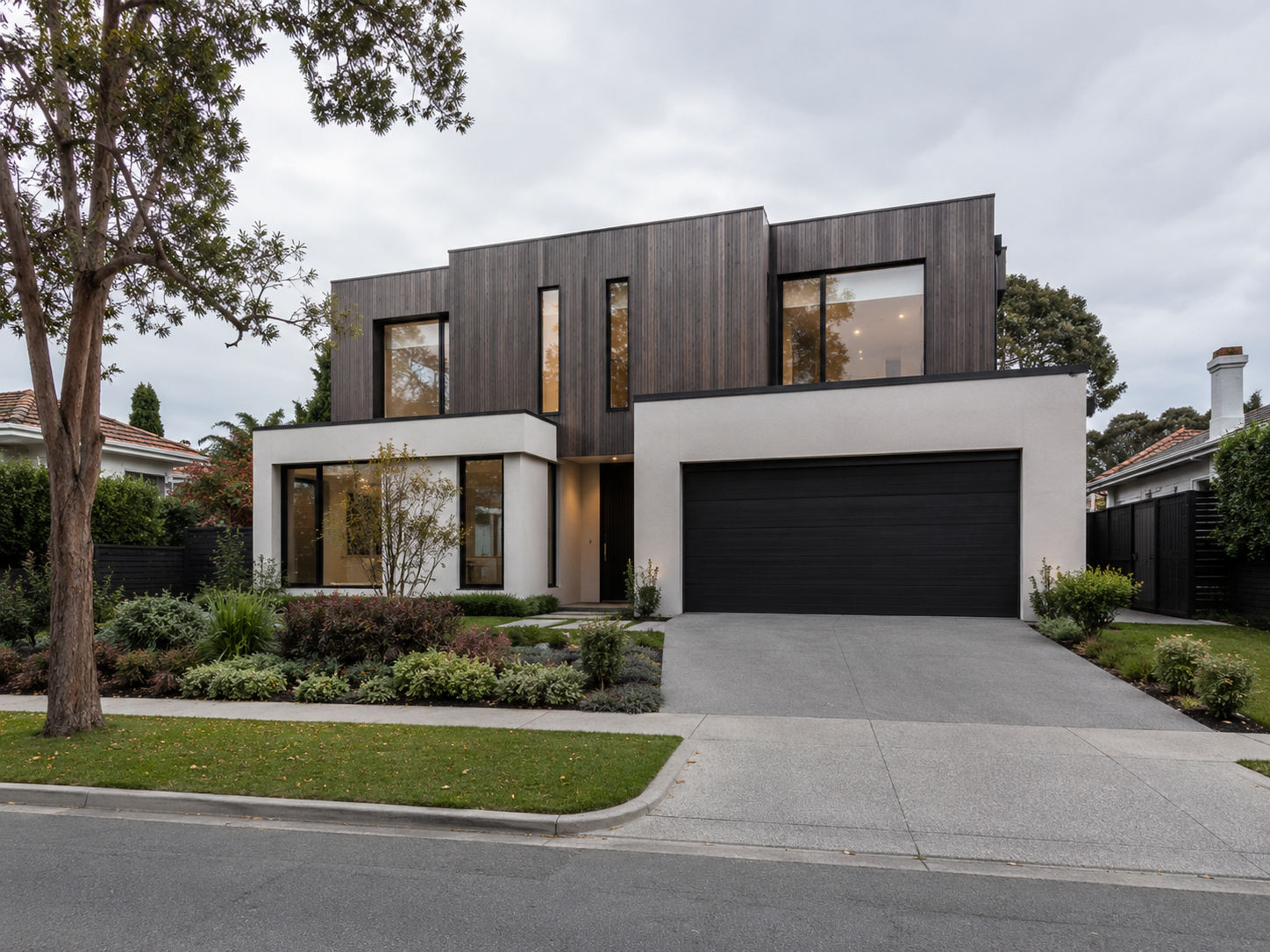
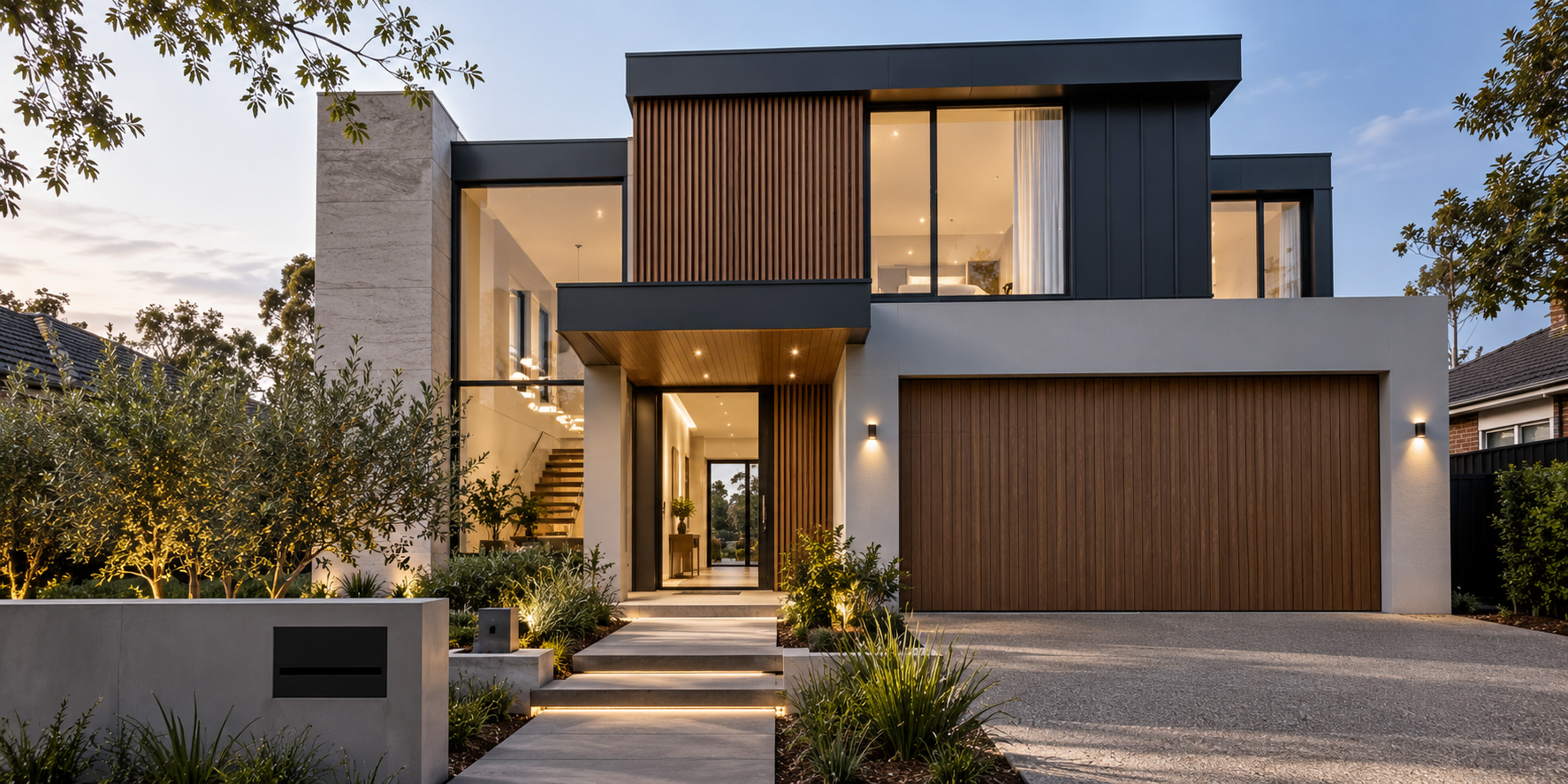
Detail is where custom work either holds up or does not. The Camberwell build shows the level involved: a cathedral ceiling running from the lounge through to the rear facade and finishing in a timber atrium above the glass bi-folds, a handcrafted 1.6 metre pivot front door, Calacatta marble, a bespoke wine cellar and CBUS automation, with the joinery handcrafted by an in-house carpentry team.
The North Warrandyte build resolves a different site and brief, with recycled timber posts sourced from Kerford Pier in St Kilda used as structural and visual elements, a 13 metre lap pool, Miele appliances and CBUS automation throughout. Those are the kinds of elements to walk up to and examine closely on any builder's completed work, including ours, before you commission custom home construction.
Six questions surface most of what matters:
The verification steps are the same in principle and different in detail. Queensland contractors are listed in the QBCC licensee register, and the QBCC's guidance on how to find a licensed contractor (page last reviewed 12 December 2025) states that "if you cannot find them, there's a chance they're not licensed".
Licensed contractors must show their name as registered and their unique QBCC licence number in advertising, and an ad missing those details is a flag. Licensing thresholds apply by work value and by trade, with plumbing, drainage, gas fitting and fire protection work requiring a licence regardless of value. ROMAAC Group holds QBCC registration and has completed a project at Burleigh Waters.
The method is the same for every builder on your shortlist: check the register, check the compliance and enforcement register, read reviews with the volume, recency and display-home filters applied, get three quotes on identical scope, confirm which warranty scheme your contract falls under, and inspect completed work rather than display homes.
Applied honestly, it will shorten most shortlists quickly. If you want that scope defined properly before you compare quotes, a pre-construction consultation is the sensible place to start.
There is no single answer, and any page that gives you one is ranking builders against criteria it has not disclosed. Reliability is something you verify rather than accept: current registration with no adverse entries on the Compliance and Enforcement Register, completed builds you can inspect in person, and a contract with a clear variation process.
It depends on inputs that vary widely: whether land and site costs are included, the size and complexity of the design, site conditions and access, and the specification level of finishes. Construction costs also move over time, so published figures date quickly. Get a builder to price your actual site and specification rather than working from a general figure.
Star ratings are not comparable across builder types, because review volume tracks build volume. A volume builder accumulates hundreds of reviews; a custom builder completing a handful of homes a year cannot. Compare builders of the same type, weight the last twelve to eighteen months most heavily, and read for detail rather than the average.
Trust is not a national ranking, it is a set of things you can check on a specific builder: current registration for the class of work, a clean compliance and enforcement record, completed homes you can walk through, references from owners who have passed handover, and a contract that spells out variations, provisional sums and warranty cover.

.svg)

.png)
