


Latest articles


Follow Us


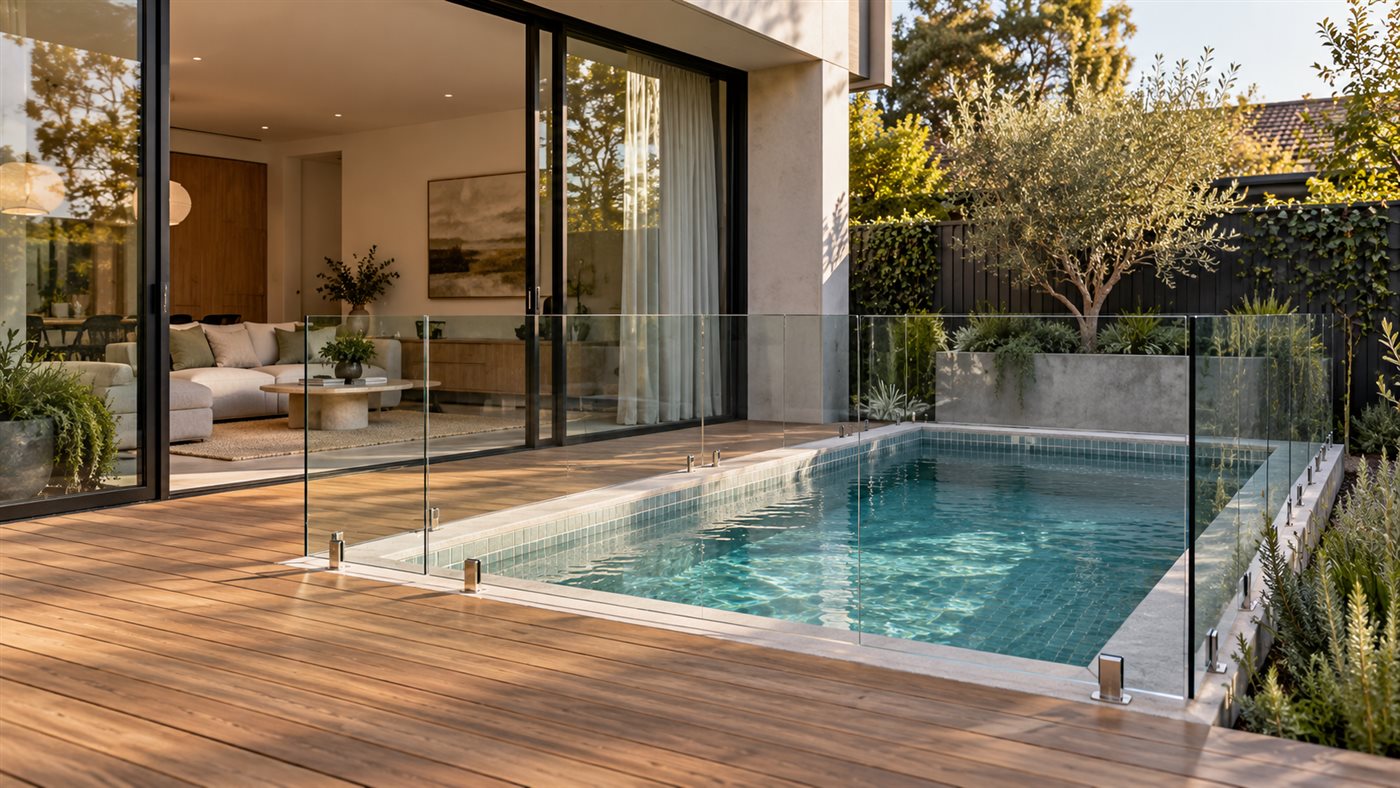

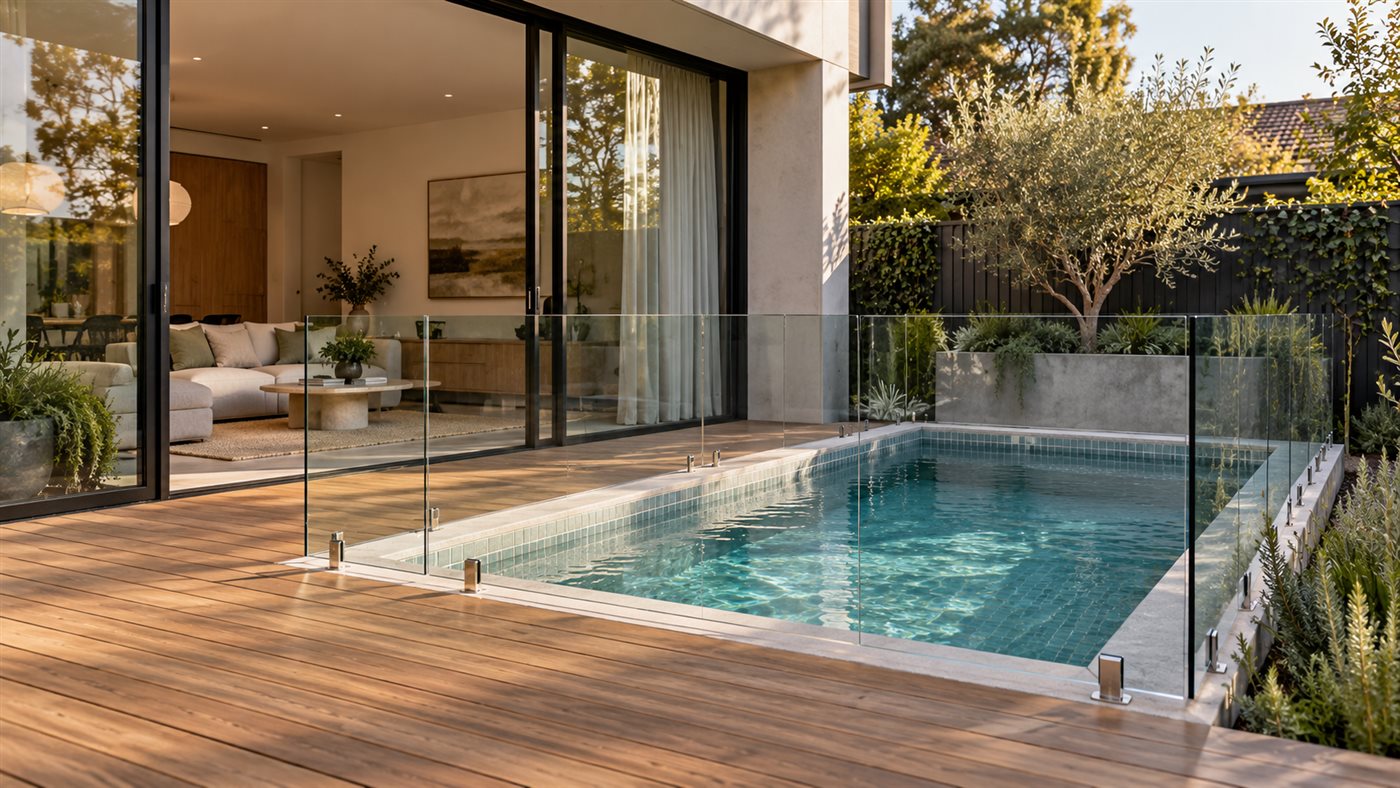
A plunge pool is a small, deep pool built for cooling off, soaking and relaxing rather than swimming laps. Many are around two to four metres long and deep enough to stand in, which makes them a practical way to bring water into a smaller backyard or courtyard.
The best plunge pools are planned with the house or outdoor area around them, not added as an afterthought. This guide covers the sizes to expect, where to place one, the main construction types, design ideas, what published figures say about cost, and the permits and barrier rules that apply in Victoria.
A plunge pool is a compact, relatively deep pool designed for cooling off and soaking, not for swimming laps.
There is no regulated definition or size. Pool cost guide Compare Pool Quotes describes plunge pools as short, relatively deep pools, and notes that the same label is used for shells of very different sizes. What separates a plunge pool from a standard pool is its purpose: you step in, sit, float and cool down, rather than swim.
That makes a plunge pool a good fit for small and medium blocks, townhouses and courtyards, and for households that want water in the garden without giving the whole yard to a pool. The term is also used for two other products.
Above-ground plunge pools are freestanding shells, often steel or polyethylene, that sit on a prepared base. Cold plunge tubs are small chilled tubs used for recovery. This guide focuses on in-ground and partly in-ground plunge pools built as part of a home's outdoor area.
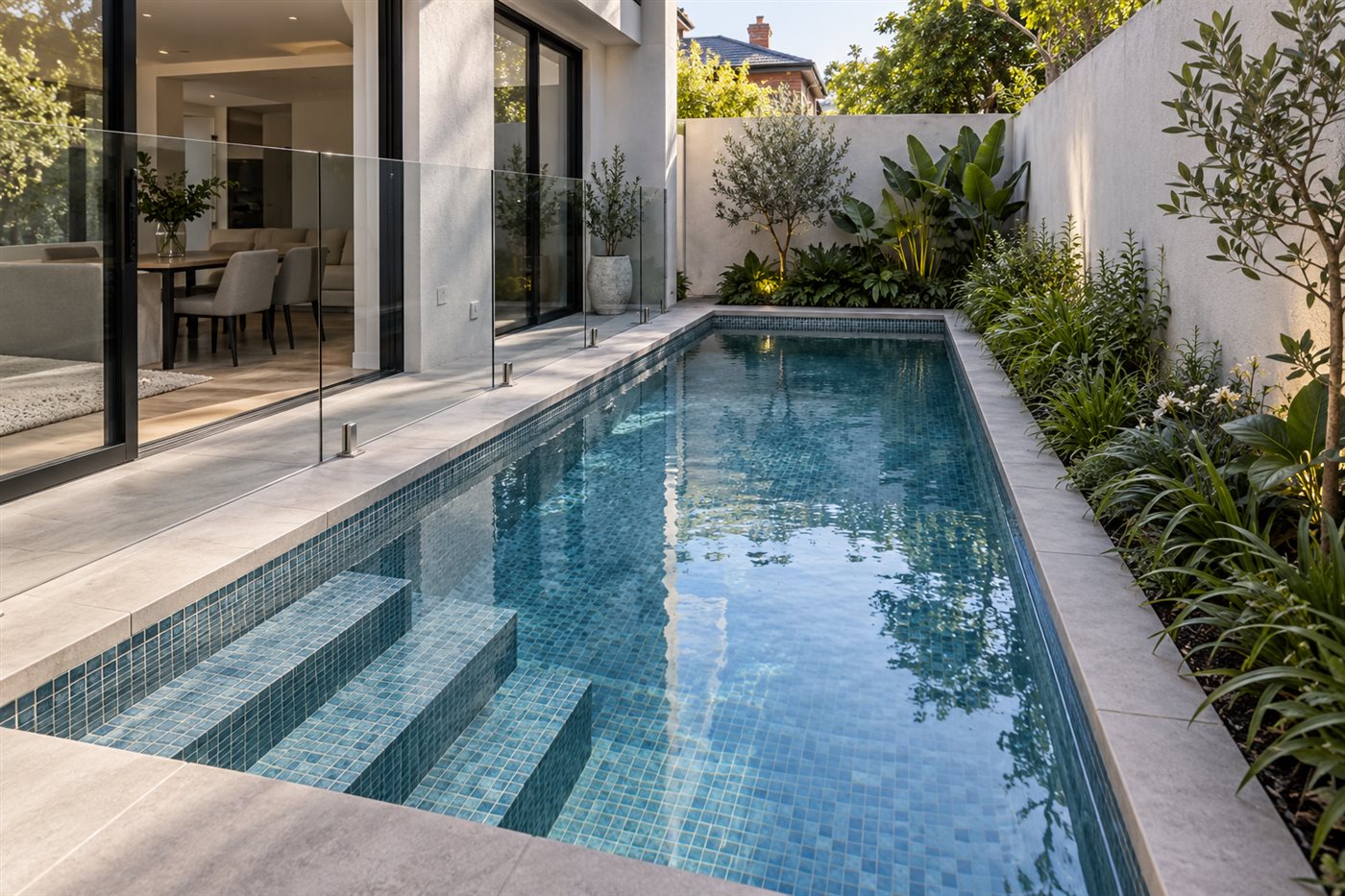
Many plunge pools are around two to four metres long and 1.2 to 1.5 metres deep, but there is no standard size.
Published manufacturer dimensions give a useful starting point for planning a small plunge pool:
Concrete plunge pools are built on site, so their plunge pool dimensions can be set to suit the space. When sizing, think about how the pool will be used. Two adults soaking need room for a built-in bench and steps; a family cooling off in summer needs more open water. Remember that the coping, paving and barrier add to the footprint, so the space you need on the block is larger than the water surface.
Placement decides how much a plunge pool gets used, and how easy and costly it is to build.
Work through these decisions before choosing a shape or finish:
A small backyard plunge pool often works best as part of a connected outdoor area rather than a standalone feature, alongside the decks, alfresco areas and gardens that make up most outdoor living ideas for Melbourne homes.
The construction type sets the shape options, the build time and how the pool gets onto the site.
A concrete plunge pool is formed and poured on site. Any size or shape is possible, and the finish can be tiled, rendered or pebbled to match the house. It takes longer to build because the shell, waterproofing and finish are done in stages on site, but it suits tight, irregular spaces and custom designs.
Fibreglass plunge pools are factory-made shells in set sizes. They install faster because the shell arrives finished, but they need a clear path, or a crane lift, to get the shell into position.
Precast plunge pools are also made off site and delivered whole. Like fibreglass, the choice of sizes is fixed and access matters.
Whichever type you choose, the excavation, plumbing, electrical work, barrier and surrounds are site work, and they often decide the final cost and programme more than the shell does.
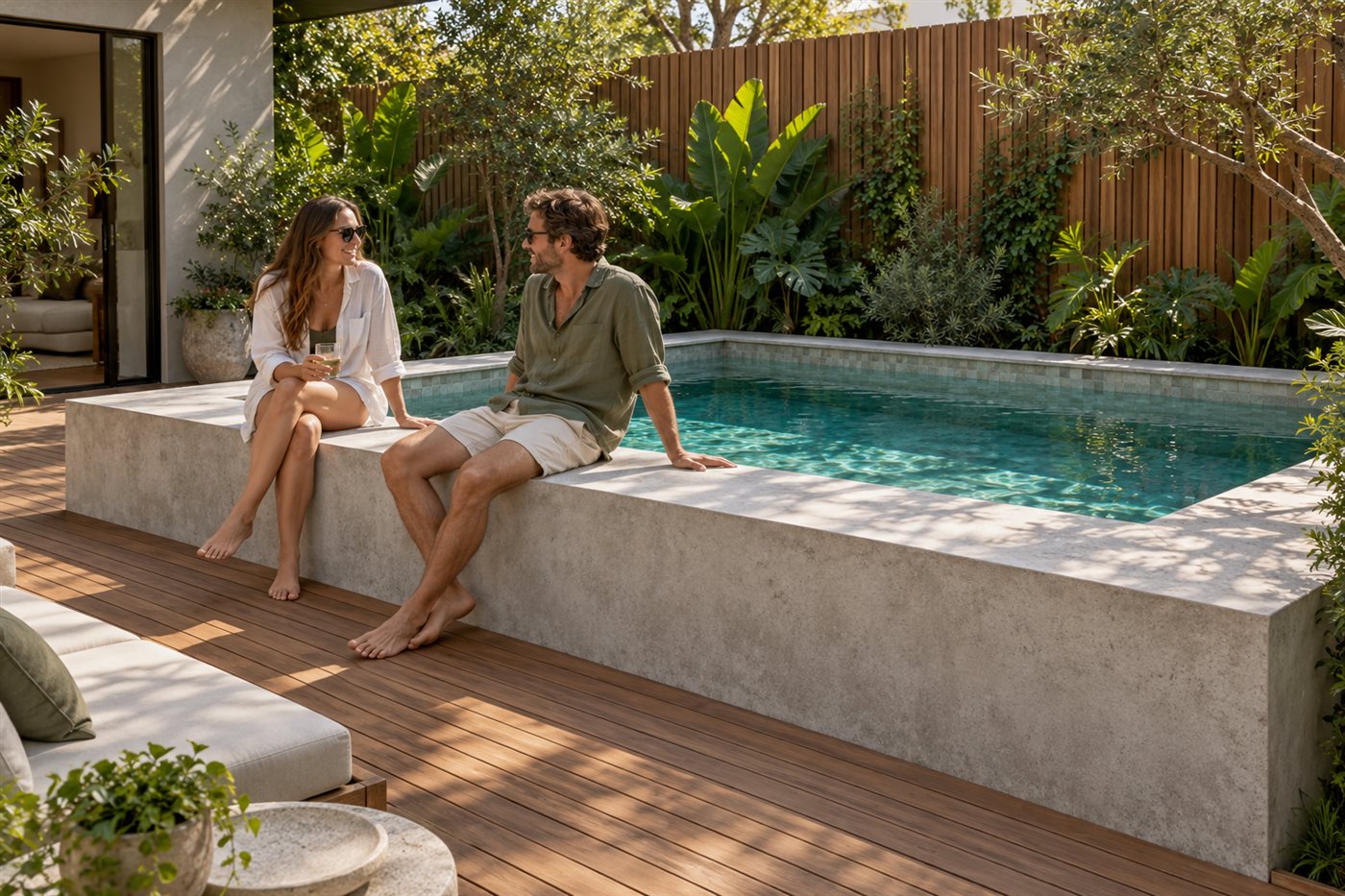
The strongest plunge pool designs treat the pool as part of the architecture, not an object dropped into the garden.
A few plunge pool ideas that work well in contemporary Australian homes:
Good plunge pool landscaping softens the barrier and edges and ties the pool to the rest of the garden, which is why landscape design in custom homes works best when it is decided with the house design.
Published installed figures for a plunge pool start in the high $20,000s for a compact fibreglass pool and can run well past $50,000 for concrete or difficult sites, and the shell is only part of the cost.
Published figures vary widely because sources include different items, so the table shows each figure with what it covers and where it comes from.
The plunge pool cost for your home depends mainly on:
Ask any pool builder for a written quote that lists what is and is not included, so you can compare like with like.
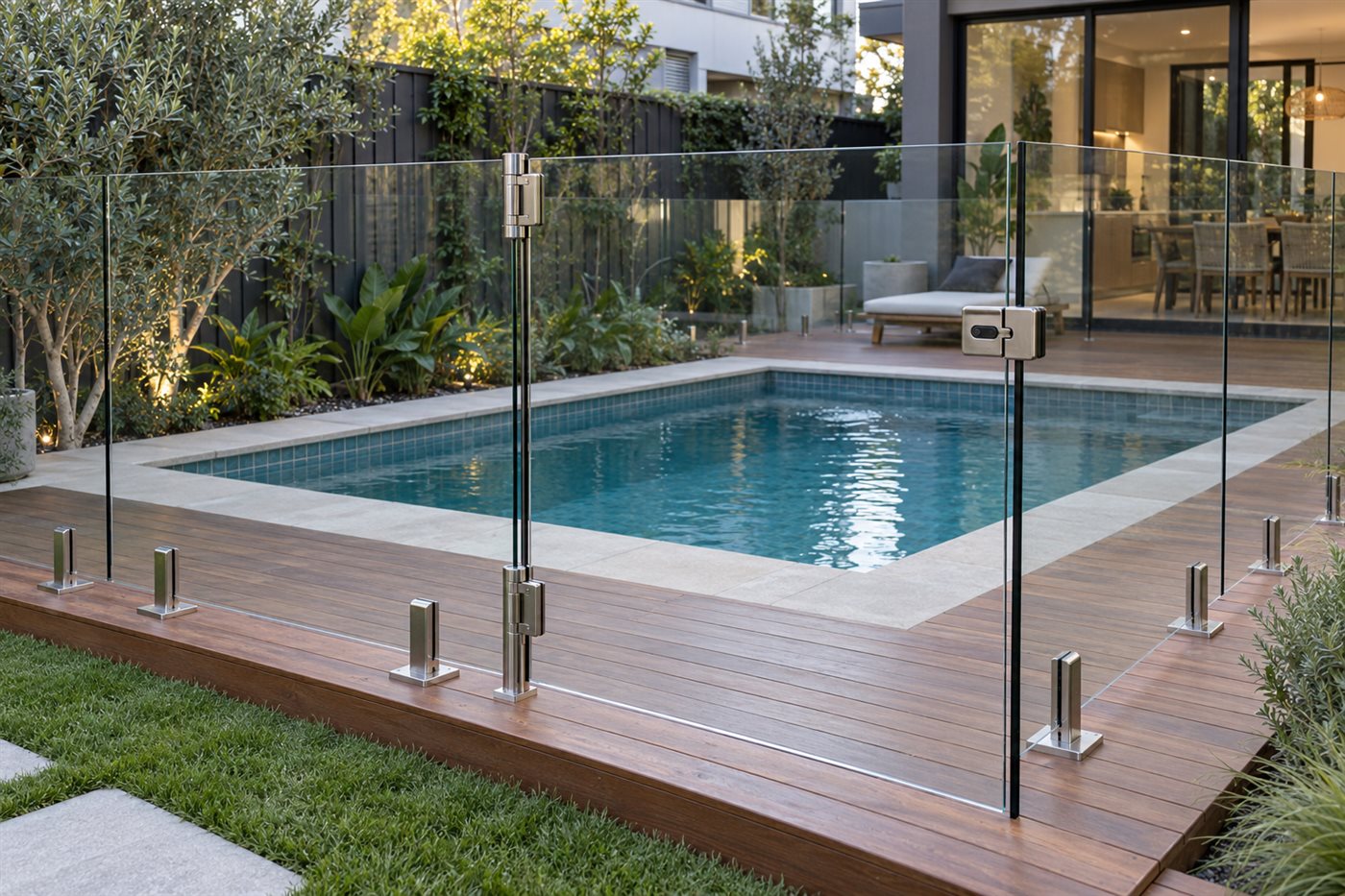
In Victoria, a plunge pool that can hold more than 300 mm of water needs a building permit, a compliant safety barrier and registration with council.
The Victorian Building Authority states that the pool and spa safety laws apply to pools and spas capable of holding more than 300 mm of water, which covers almost every plunge pool. Nillumbik Shire Council, for example, confirms that a building permit is needed to construct or install a pool or spa of that depth.
For pools built on or after 1 November 2020, the VBA sets out these steps:
Only a registered building surveyor, registered building inspector or municipal building surveyor can inspect the barrier. If you are outside Victoria, pool permit and barrier rules are set by your state, so check with your council before you design. In Victoria, a pool is approved through the same process as other building permits in Victoria, issued by a building surveyor.
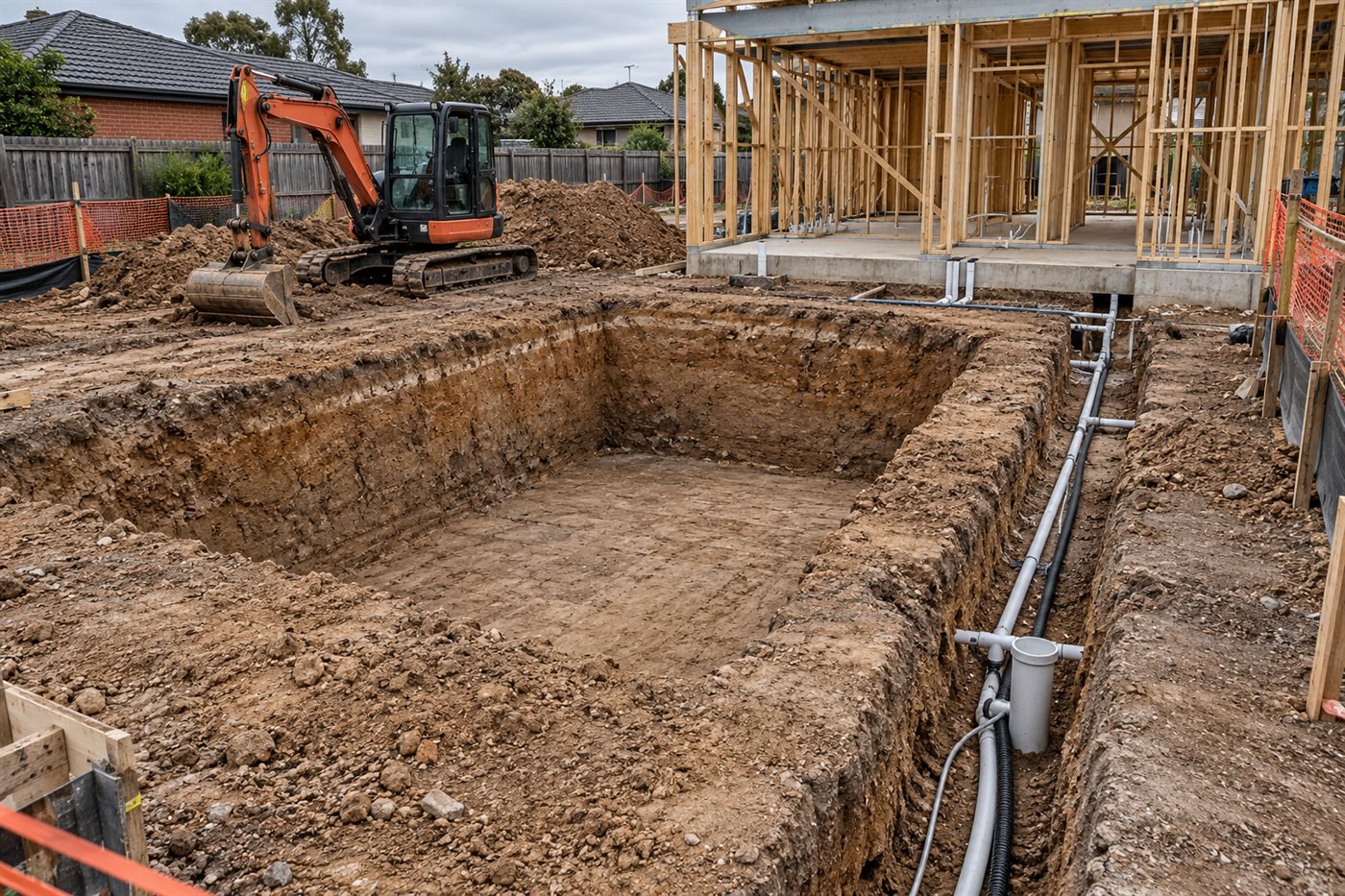
Building a plunge pool while the site is open is usually simpler than adding one to a finished home.
During a new build or major renovation, machinery can already reach the backyard, and excavation, drainage and service trenches are already under way. Pool plumbing, drainage, power and the equipment location can be run with the rest of the services rather than cutting into a finished garden later. Plungie's own published range for crane hire, from $3,000 to more than $14,000 depending on access, shows how much getting a pool onto a finished site can add.
Planning early also improves the design. The barrier can be designed into the landscape instead of added as a fence, levels can be set so the pool sits flush with the deck or living floor, and the pool can be positioned for sun, privacy and views from the house. It is the same principle behind ROMAAC Group's approach to landscape design and outdoor living: outdoor areas planned with the house, not organised after handover.
A plunge pool works best when its position, levels, services and barrier are decided with the house and garden around it. ROMAAC Group plans outdoor living and luxury amenities as part of custom builds and renovations across Melbourne. Make an enquiry to talk through how a plunge pool could fit your project.
A plunge pool is smaller and built for cooling off and soaking rather than swimming laps. Many are around two to four metres long and 1.2 to 1.5 metres deep, while a standard backyard pool is longer and designed for swimming. A plunge pool needs less space and less water.
Published figures start at around $25,000 to $45,000 installed for a compact fibreglass plunge pool, according to Compare Pool Quotes, while Yakka Labour puts a 4 to 5 metre concrete plunge pool at $50,000 to $80,000. Access, excavation, the barrier and landscaping can add significantly to the total.
There is no standard size. Published examples include the Little Pools Plunge 3 at 2.67 by 1.93 metres internally and 1.2 metres deep, and the round Plungie Arena at 3.3 metres in diameter with 1.5 metres of water depth. Concrete plunge pools can be built to any size.
Yes, in most cases. A building permit is needed for a pool or spa capable of holding more than 300 mm of water, which covers almost every plunge pool. The pool must also be registered with council and have a certificate of barrier compliance lodged.
In Victoria, yes. Pools and spas capable of holding more than 300 mm of water need a compliant safety barrier, and the barrier must be inspected and certified when the pool is registered and then every four years, according to the Victorian Building Authority.
Yes. A plunge pool holds far less water than a full-size pool, which makes it easier to heat, and a heat pump or other pool heater can extend its use well beyond summer. Heating needs a location for the equipment and an electrical or gas connection, so it is best planned with the rest of the pool services.


